
The Evolution of 3D UV Laser Processing in Modern Industrial Manufacturing
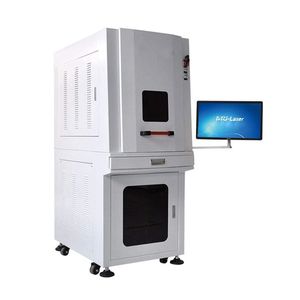
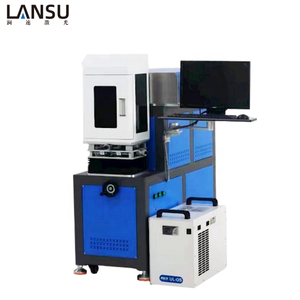
As global electronics and automotive supply chains expand across Southeast Asia, industrial manufacturers in Thailand are rapidly upgrading from conventional thermal marking tools to advanced 3D UV laser marking systems. Operating at a short ultraviolet wavelength of 355nm, UV lasers utilize "cold ablation" processing. Unlike infrared fiber (1064nm) or CO2 (10.6μm) lasers that rely on intense thermal energy to vaporize material, ultraviolet photons directly break the molecular bonds within organic and inorganic substrates without transferring destructive heat into the surrounding matrix.
Information Gain Insight: Modern 3D UV laser marking eliminates heat-affected zones (HAZ), preventing structural micro-fractures in ceramic wafers, thermal distortion in thin-walled plastics (ABS, HDPE, PET), and surface carbonization on sensitive PCB substrates. This renders 3D UV laser technology the gold standard for high-density 2D Data Matrix and GS1-compliant QR code direct part marking (DPM).
The integration of dynamic 3-axis galvanometer technology represents a monumental leap forward over traditional 2D flat-bed marking heads. Traditional 2D galvo systems suffer from defocusing issues when handling non-planar workpieces—such as curved automotive pipes, slanted plastic enclosures, or multi-tiered electronic components. By implementing an automated dynamic focal lens unit synchronized with real-time Z-axis movement, our 3D UV laser markers maintain an ultra-fine focal spot diameter across 3D surfaces with elevation changes up to 80mm in a single optical pass, eliminating complex mechanical rotary indexing fixtures.