
Precision Laser Engraving, Marking & Cutting Equipment
Direct export from ISO 9001 certified manufacturing facilities. Engineered for high performance under tropical factory environments in Dhaka, Chittagong, and Gazipur.
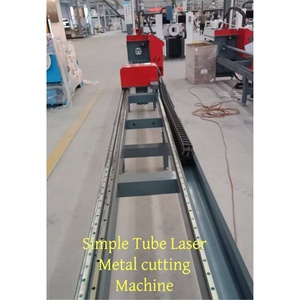
1500W Mini Fiber Laser Tube Cutting Machine Compact Design for Steel & Aluminum Thin Pipe (6 Meter)
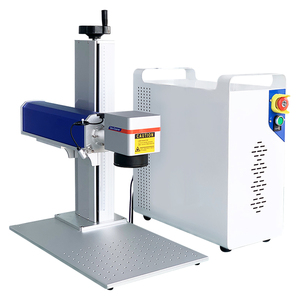
Fiber Laser Engraving Machine For Advertising & High-Power Industrial Metal Marking
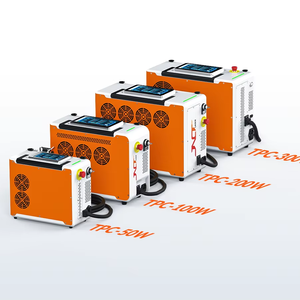
Laser Cleaning Solution For Heavy-Duty Applications 300W Pulsed Power Zero Consumables
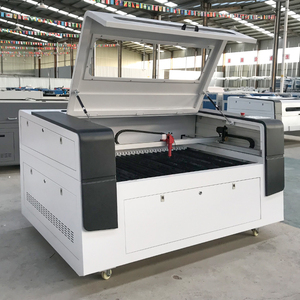
100W AI CO2 Laser Cutting & Engraving Machine for Metal Sheet, Acrylic, Wood & Fabric
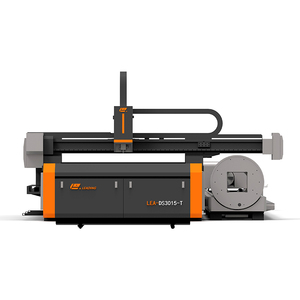
3000W CNC Tube Fiber Laser Cutting Machine with Raytools Laser Head & 6m Pipe Capacity
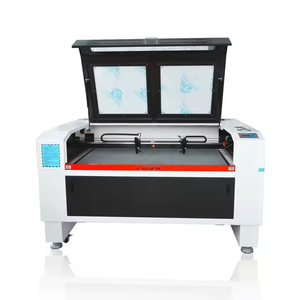
Fully Automatic Industrial CO2 Laser Cutting Machine for Acrylic, Leather & Textile Boards
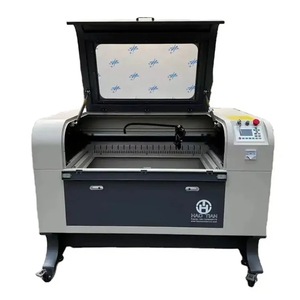
HT 690 High-Power Laser Engraving & Cutting Machine (900x600mm Workbed, 100W)
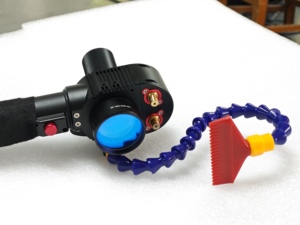
800g Lightweight 300W Handheld MOPA Pulse Laser Cleaning Gun with Air Blowing & QCS Connector
Engineering Color Laser Engraving: Wavelength Dynamics, MOPA Technology, and Metal Oxide Thin-Film Interference
In modern industrial manufacturing, traditional laser marking—which primarily produces monochrome high-contrast marks through surface melting or vaporization—is being rapidly augmented by Color Laser Engraving technology. Utilizing specialized Master Oscillator Power Amplifier (MOPA) fiber laser sources, manufacturers can selectively generate vibrant, reproducible colors on metals (specifically stainless steel and titanium) without chemical reagents, pigments, or surface-damaging acids.
For Bangladeshi exporters operating across the Ready-Made Garments (RMG), garment accessories (zippers, pullers, metal buttons), cutlery, medical tooling, and high-end promotional hardware sectors, color laser engraving represents a high-margin value addition. By precise control over laser parameters, local manufacturers can produce permanent, anti-counterfeit, and aesthetically striking color logos, serial codes, and branding elements.
The Physics of Color Laser Marking on Stainless Steel
Color laser engraving on metallic surfaces is achieved through a process called heat-induced thin-film oxidation. When a focused laser beam scans stainless steel (such as Grade 304 or 316) or titanium, it heats the microscopic surface layer in the presence of atmospheric oxygen. This thermal reaction creates a semi-transparent dielectric metal oxide layer ($\text{Cr}_2\text{O}_3$ or $\text{TiO}_2$).
The visual color generated is not a result of laser ink or dye, but of thin-film optical interference. When light strikes the laser-processed surface, a portion of the light reflects off the outer boundary of the oxide film, while another portion penetrates the film and reflects off the underlying metal substrate. The phase difference between these two reflected light waves produces destructive and constructive interference patterns, amplifying specific wavelengths of visible light (reds, blues, golds, greens, and purples) depending on the exact thickness ($\Delta d$) of the oxide layer.
| Oxide Film Thickness | Dominant Interference Color | Pulse Duration Window | Frequency Range | Target Application in Bangladesh |
|---|---|---|---|---|
| 30 - 50 nm | Bright Yellow / Gold | 10 - 30 ns | 200 - 350 kHz | Brass-look RMG metal buttons, decorative rivets |
| 60 - 90 nm | Red / Violet | 35 - 60 ns | 120 - 200 kHz | Garment zipper pullers, brand anti-counterfeiting tags |
| 100 - 140 nm | Deep Blue / Cyan | 60 - 100 ns | 80 - 150 kHz | Surgical instruments, stainless steel tableware, electronics |
| 150 - 180 nm | Greenish Teal | 100 - 200 ns | 40 - 100 kHz | Export-grade metal accessories, luxury packaging metal plates |
Why Standard Q-Switched Lasers Fail at Color Engraving
A critical point of failure for factories attempting color laser marking with basic fiber engravers is the limitation of Q-switched laser architectures. Q-switched fiber lasers have fixed pulse durations (typically around 100 ns) and limited frequency adjustment ranges (20 kHz to 80 kHz). As a result, the heat input into the material cannot be fine-tuned. Excessive heat leads to irregular oxide growth, thermal warping, and murky greyish burns rather than uniform, brilliant spectral colors.
In contrast, MOPA Fiber Laser Systems allow independent tuning of:
- Pulse Width (Duration): Variable from 2 ns up to 500 ns. Short pulses minimize thermal diffusion to surrounding metal, preventing thermal distortion.
- Pulse Frequency (Repetition Rate): Adjustable from 1 kHz up to 4000 kHz, allowing ultra-high overlap rates required for homogenous oxide film development.
- Peak Power & Duty Cycle: Precise energy dosing prevents localized burning or pitting of the stainless steel surface.
Localized Industry Application Scenarios Across Bangladesh
Tailored laser processing solutions designed to meet the high-throughput, export-compliant demands of Bangladesh's key industrial sectors.
1. RMG & Apparel Accessories (Dhaka & Gazipur Clusters)
Bangladesh is the world's second-largest exporter of Ready-Made Garments. Leading trim and accessory factories in Dhaka, Gazipur, and Narayanganj utilize MOPA color lasers for permanent color marking on metal zippers, alloy buttons, rivets, and brand tags. Eliminates toxic electroplating processes and complies with stringent EU REACH and OEKO-TEX eco-friendly standards.
2. Medical Devices & Pharmaceutical Packaging
With Bangladesh’s burgeoning pharmaceutical export market (supplying over 140 countries), non-contact, cold laser marking is crucial. UV lasers (355nm wavelength) allow ultra-fine, zero-heat marking of high-density QR codes, batch numbers, and expiry dates on blister packs, ampoules, glass vials, and surgical-grade stainless steel instruments.
3. Hardware, Light Engineering & EPZ Component Traceability
Factories operating within the Chittagong, Adamjee, and Uttara Export Processing Zones (EPZs) require precise industrial part marking for automotive assemblies, electrical switchgears, and metal enclosures. Our high-power MOPA fiber systems engrave high-density 2D DataMatrix codes capable of surviving harsh acid cleaning and outdoor exposure.
Key Market Trends Driving Laser Technology Adoption in Bangladesh (2026–2030)
The manufacturing landscape in Bangladesh is undergoing a rapid technological shift driven by automation, environmental compliance, and diversification into higher-value export categories. Key growth trends include:
- Shift from Chemical Etching to Sustainable Laser Annealing: Global apparel brands sourcing from Bangladesh are enforcing strict ESG (Environmental, Social, and Governance) guidelines. Traditional chemical acid-etching for metal buttons and denim finishing is being banned or heavily penalized. Fiber and CO2 lasers offer a 100% dry, zero-water, zero-chemical alternative.
- Demand for Anti-Counterfeiting & Micro-Marking: As Bangladeshi pharmaceutical and garment brands expand globally, counterfeit goods threaten revenue. Color laser engraving allows factories to embed sub-millimeter color micro-logos and dynamic DataMatrix codes that cannot be replicated by conventional printing methods.
- Industrial Power Stability Adaptation: A historical challenge in local industrial zones has been power quality fluctuations. Modern industrial laser systems exported to Bangladesh are now built with wider voltage tolerance (220V ±15% 50Hz), integrated surge isolation, and heavy-duty IP54 industrial enclosures resistant to high humidity and atmospheric dust.
- Adoption of Galvo-Based High-Speed CO2 & Fiber Automation: To combat rising labor costs and maintain tight delivery schedules at Chittagong port, manufacturers are replacing manual mechanical engravers with automated Galvo scanner systems capable of marking up to 12,000 mm/s.
Laser Technology Selection Matrix for Factory Managers
Select the optimal laser wavelength and optical configuration for your specific material substrate and throughput requirement.
| Laser Source Type | Wavelength | Color Engraving Support | Primary Suitable Materials | Key Industrial Strengths |
|---|---|---|---|---|
| MOPA Fiber Laser | 1064 nm | YES (Multi-Color on SS/Titanium) | Stainless Steel, Titanium, Aluminum, Brass, Hard Plastics | Independent pulse width tuning (2-500ns); high precision color oxidation and deep metal engraving. |
| Standard Q-Switched Fiber | 1064 nm | NO (Monochrome / Grey only) | Metals, Opaque Plastics, Anodized Aluminum | Cost-effective solution for basic serial numbers, barcoding, and heavy metal removal. |
| UV Cold Laser | 355 nm | Limited (High Contrast Black/White) | Glass, Sensitive Polymers, HDPE, Silicon, PCB Boards | Near-zero thermal effect ("cold processing"); ideal for micro-marking heat-sensitive electronics and medical plastic. |
| CO2 Galvo Laser | 10.6 µm | NO | Acrylic, Denim/Textiles, Wood, Leather, Paper, Glass Etching | Ultra-high-speed surface carbonization and vector cutting for non-metallic industrial goods. |
Why Partner with Our Global OEM Engineering Network?
Selecting an industrial laser manufacturer is a long-term capital investment. Our machines are built adhering to rigorous international standards, ensuring seamless deployment across industrial facilities in Bangladesh.
ISO 9001 & CE Certified Assembly
Every laser engraver undergoes a 72-hour continuous burn-in test, power stability calibration, and beam quality ($M^2 < 1.3$) verification prior to export packing.
3D Dynamic Auto-Focus Head
Equipped with 3-axis galvo delivery technology as standard, enabling uniform color engraving across curved surfaces, stepped plates, and complex 3D parts without manual focus readjustments.
Tropicalized Hardware Architecture
Designed specifically for humid climates with sealed optical paths, dust-proof Galvo heads, double-shielded fiber cables, and low-noise cooling systems.
Frequently Asked Questions by Bangladesh Buyers
Essential operational, technical, and shipping answers for factory owners, procurement officers, and engineering leads.
Can color laser engraving be achieved on all metals?
How do your laser machines handle voltage fluctuations in Bangladesh factories?
What is the lead time and shipping method to Chittagong Port or Dhaka Airport?
What software is included, and does it support Bangla language graphics?
How durable is the color mark on metal buttons and RMG accessories?
What warranty and technical support services do you provide in Bangladesh?
Transform Your Bangladesh Production Line Today
Request a customized sample test on your material or consult directly with our laser application engineers for technical specifications, factory layout advice, and FOB/CIF pricing.