
1. Executive Summary & Malaysian Industrial Context
As Malaysia advances rapidly under the New Industrial Master Plan (NIMP 2030), manufacturing facilities across Penang, Selangor, Johor, and Sarawak are undergoing aggressive digital transformations. High-precision permanent part traceability, micro-serialization, Direct Part Marking (DPM), and zero-maintenance thermal processing have transitioned from optional upgrades to mandatory operational benchmarks. In high-value ecosystems—ranging from Penang's global Electrical & Electronics (E&E) packaging hub to Johor Bahru’s medical device manufacturing zones and the Klang Valley’s heavy automotive and precision sheet metal sectors—industrial buyers require fiber laser engraving machines that combine micro-resolution optical delivery with high thermal resilience.
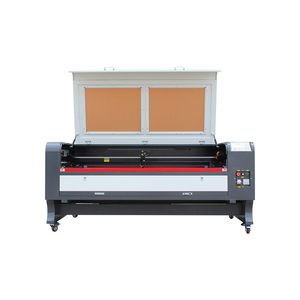
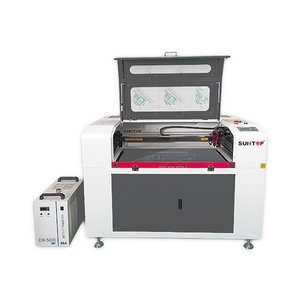
As a direct original equipment manufacturer (OEM) and factory supplier serving the Malaysian market, we design and build industrial fiber laser engravers, MOPA pulse-tunable markers, UV cold laser systems, and high-power CO2 laser cutters engineered specifically for continuous operational duty cycles under tropical ambient conditions. Unlike standard commercial desktop units that degrade under high relative humidity ($>85\% \text{ RH}$) and elevated shopfloor temperatures ($35^\circ\text{C}-40^\circ\text{C}$), our industrial laser chassis incorporate sealed optical isolators, IP54-rated optical enclosures, and dual-stage thermo-electric cooling (TEC) architectures.
2. Fiber Laser Physics & Photothermal Metallurgy
Selecting the correct laser source requires a precise understanding of beam-material interaction physics. Fiber lasers operate at a central wavelength of 1064nm (near-infrared spectrum), generated through ytterbium-doped optical fibers pumped by high-efficiency semiconductor diode modules. The 1064nm wavelength exhibits exceptional absorptivity across ferrous and non-ferrous metals, engineered polymers, and technical ceramics.
2.1 MOPA vs. Standard Q-Switched Fiber Laser Architecture
For Malaysian industrial procurement officers evaluating supplier specifications, understanding the structural difference between MOPA (JPT / IPG MOPA) and conventional Q-switched fiber lasers is vital for line efficiency:
- Q-Switched Fiber Lasers: Utilize a fixed pulse duration (typically 100ns–120ns). While highly effective for heavy metal deep engraving, tool steel die marking, and general rust removal, their fixed high energy per pulse produces a significant Thermal Affected Zone (TAZ). This heat buildup can deform thin aluminum plates ($<0.5\text{mm}$) or melt plastic components.
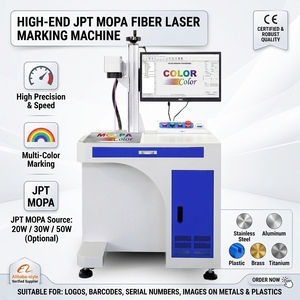
- MOPA Fiber Lasers (Master Oscillator Power Amplifier): Decouple the seed laser generation from the power amplification stage. This allows independent control over pulse width (2ns to 500ns) and repetition rate (1 kHz to 4000 kHz). Short pulse widths (2ns–15ns) minimize heat conduction into the surrounding material, enabling crisp color marking on titanium, dark black corrosion-resistant annealing on surgical stainless steel, and damage-free ablation of gold plating on printed circuit boards.
2.2 3D Dynamic Galvo Beam Delivery vs. 2-Axis Flat Field Lenses
Conventional 2D galvo laser engravers rely on flat field F-theta scan lenses with a fixed focal depth ($z$-axis depth of focus typically $\pm 1.5\text{mm}$). When marking contoured automotive engine castings, slanted pipe fittings, or spherical medical implants, 2D systems require complex mechanical indexing or manual multi-pass step height adjustments.
Our 3D dynamic focus laser workstations integrate a high-speed linear optic motor on the expander axis. The optical software dynamically calculates surface topography in real-time, modulating the focal point across a $z$-depth of up to $80\text{mm}$. This enables single-cycle seamless marking across compound curves, stepped flanges, and inclined planes without sacrificing spot size ($d_0 \approx 25\mu\text{m}$) or spatial energy density.
3. Technical Comparison Matrix: Selecting the Right Wavelength
To assist factory managers and system integrators across Malaysia in selecting the correct laser mechanism, the following matrix summarizes technical capabilities, material compatibility, and target industry applications:
| Laser Technology | Wavelength & Source | Optimal Materials | Malaysian Sector Fit | Marking Characteristics |
|---|---|---|---|---|
| MOPA Fiber Laser | 1064 nm (Ytterbium) | Stainless steel, aluminum, brass, titanium, ABS, polyamides | Penang E&E / Johor Automotive | Zero-heat annealing, dark black corrosion-free marking, color titanium marking, deep die etching. |
| Standard Fiber Laser | 1064 nm (Q-Switched) | Tool steel, carbon steel, iron castings, dense metals | Klang Valley Heavy Industry | High energy density, deep serial etching, heavy data plate engraving, structural beam marking. |
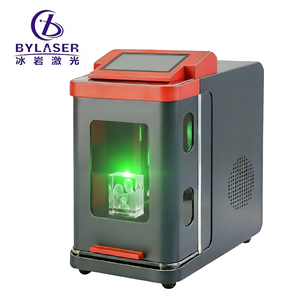
| UV Cold Laser | 355 nm (Third Harmonic) | Glass, medical polymers (HDPE, PEEK), silicon wafers, sapphire | Johor Medical / Semiconductor | Photothermal ablation (cold process), zero thermal micro-cracking on glass, ultra-fine $10\mu\text{m}$ spot. |
| RF / Glass CO2 Laser | 10,600 nm (Gas Discharge) | Acrylic, timber, leather, textiles, organic polymers, ceramics | Packaging, Furniture & Signage | High speed vector cutting ($<20\text{mm}$ acrylic), micro-perforation, high-volatility raster engraving. |
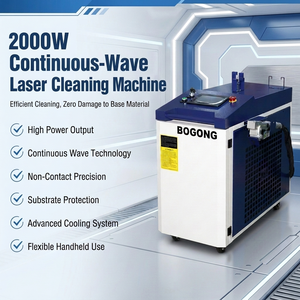
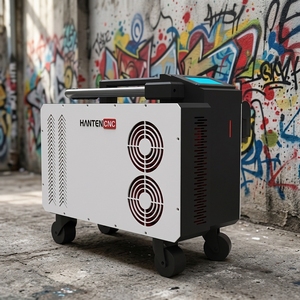
| CW Fiber Cleaning | 1064 nm (Continuous Wave) | Rusty steel, oxidized aluminum, heavy paints, industrial grease | Shipbuilding & Structural Repair | High area coverage cleaning ($10\text{m}^2/\text{hr}$), substrate paint stripping without chemical solvents. |
4. Localized Application Scenarios Across Malaysia
4.1 Penang Semiconductor & E&E Packaging Hub
In Bayan Lepas and Batu Kawan Industrial Parks, tier-1 electronics manufacturing service (EMS) providers require micro-scale Data Matrix codes (ECC200 standards) etched onto lead frames, IC substrate carriers, and anodized aluminum heat sinks. The code dimension often measures less than $1.5\text{mm} \times 1.5\text{mm}$, housing high-density serial information readable by automated vision inspection systems.
Using our 50W JPT MOPA Fiber Laser Marking Workstation equipped with a short-pulse setting (4ns) and a high-resolution 100mm F-theta lens, operators produce sharp, high-contrast matrix codes without thermal bleeding into adjacent IC traces. The beam spot diameter of $18\mu\text{m}$ guarantees clean cell definition, passing stringent ISO/IEC 15415 barcode quality grading (Grade A/B).
4.2 Johor Bahru Medical Device & Surgical Instrument Passivation
Southern Malaysia hosts leading global medical device manufacturers producing surgical forceps, orthopedic implants, and catheter components. Standard fiber laser etching breaks the chromium oxide ($\text{Cr}_2\text{O}_3$) passive layer of SS316L stainless steel, leading to corrosion and rust after repeated autoclave sterilization cycles.
Our specialized MOPA fiber laser annealing process heats the surface locally under controlled sub-melting temperatures, inducing controlled oxide layer growth (dark black contrast) beneath the surface skin. Independent salt-spray testing confirms zero surface degradation after 500+ autoclave sterilization cycles, complying fully with US FDA Unique Device Identification (UDI) regulations and European MDR guidelines.
4.3 Klang Valley Automotive, Machining & Heavy Fabrication
Across Shah Alam, Subang Jaya, and Klang, automotive component suppliers and structural sheet metal fabricators require deep engraving into hardened cast iron, alloy steel, and galvanized chassis components. Vehicle Identification Numbers (VIN) and heavy-duty serial plates must withstand subsequent powder coating, electro-galvanizing, or outdoor weathering without losing legibility.
Our high-power 100W–300W fiber laser systems deliver high single-pulse energy ($>1.5\text{mJ}$), rapidly vaporizing metal to achieve engraving depths of $0.3\text{mm}$ to $1.0\text{mm}$ in seconds. Integrated with heavy-duty rotary axis attachments, these systems easily process cylindrical shafts, oil pipes, and hydraulic couplings.
5. Enterprise Advantages & Manufacturing Quality Engineering
When sourcing industrial machinery directly from our factory to your site in Malaysia, enterprise buyers gain significant operational and structural advantages built on three decades of manufacturing experience:
ISO 9001:2015 Quality Assurance
Every optical assembly, galvanometer driver board, and power supply undergoes a 72-hour continuous full-load burn-in test prior to crating, eliminating infant mortality failures on arrival.
Sealed Optical Enclosure (IP54)
Designed specifically for humid, dusty factory environments. Prevents airborne oil mist and ambient particulates from contaminating sensitive galvo mirrors or field lenses.
3D Dynamic Surface Mapping
Integrated 3-axis galvo scan head maintains sharp focus dynamically across complex 3D shapes, stepped heights, and angled surfaces in a single uninterrupted operation.
Modular Component Ecosystem
Constructed using industry-standard optical interfaces (C-mount, M85 thread) and premium laser sources (JPT, IPG, Raycus) for low lifetime maintenance costs.
High Duty Cycle & MTBF
Solid-state fiber laser pumps deliver a mean time between failures (MTBF) exceeding 100,000 operational hours, providing reliable 24/7 industrial production capability.
6. Frequently Asked Questions (FAQ) by Malaysian Buyers
What is the difference between a standard Fiber laser and a MOPA Fiber laser for metal marking?
Standard Q-switched fiber lasers have a fixed pulse duration (100ns–120ns), making them ideal for high-speed general metal marking and deep engraving. However, MOPA (Master Oscillator Power Amplifier) fiber lasers allow operators to adjust the pulse width between 2ns and 500ns. Short pulse widths reduce heat input into the material, enabling high-contrast black annealing on stainless steel without rusting, vibrant color marking on titanium, and non-melting high-contrast marks on ABS plastics.
How do your laser systems handle Malaysia’s humid ambient factory conditions?
All our industrial fiber laser marking workstations exported to Malaysia are built with sealed IP54 optical paths and enclosed laser source housings. Optical components are protected by anti-reflective, moisture-resistant coated silica glass elements. Internal power supplies feature conformal-coated PCBs to guard against condensation and dust accumulation common in tropical non-air-conditioned plant environments.
What are the electrical power supply requirements for installation in Malaysia?
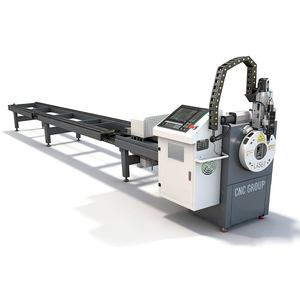
Our standard laser marking workstations (20W to 100W fiber lasers) operate on single-phase 220V–240V 50Hz AC power, matching standard Malaysian electrical mains supply (UK Type G plug standard). Heavy industrial systems such as high-power CW fiber cleaning or tube laser cutters are pre-configured for Malaysian 3-phase 415V 50Hz industrial grids. Built-in industrial EMI filters and surge protection modules guard against voltage fluctuations.
Can these laser engravers integrate directly into automated assembly lines or robotic cells?
Yes. Our Meta-i and OEM inline laser engines feature dedicated industrial I/O ports (RS232, TCP/IP, Ethernet/IP, PROFINET) and support Modbus protocols. They can be interfaced directly with PLCs (Siemens, Omron, Mitsubishi), conveyor systems, or COBOT robotic arms for fully automated line integration, barcode scanning feedback loops, and real-time database queries.
What documentation and international safety certifications are included?
All machines shipped to Malaysia are supplied with full CE Declaration of Conformity documentation, compliant with EU Low Voltage Directive 2014/35/EU and Machinery Directive 2006/42/EC. Enclosed systems strictly meet Class 1 Laser Safety standards (IEC 60825-1), equipped with safety interlock switches, red pilot positioning lasers, and certified protective observation windows.
What is the lead time, shipping process, and local technical support availability for Malaysia?
Standard fiber laser marking machines are dispatched within 7–10 business days. Sea freight to major Malaysian ports (Port Klang, Penang Port, Pasir Gudang) takes approximately 12–18 days, while expedited air freight delivers in 3–5 days. We provide comprehensive remote video commissioning, complete English technical manuals, software setup assistance (EzCad / LightBurn / SeaCAD), and fast-tracked dispatch of replacement optical spares directly to your factory.