
Bulgaria’s Industrial Evolution & The Role of Advanced Fiber Lasers
Examining how regional manufacturing hubs across Bulgaria are adopting next-generation 1064nm MOPA fiber laser systems for component traceability, surface prep, and ultra-precise engraving.
Bulgaria has emerged as one of Southeastern Europe’s most dynamic industrial hubs. From the booming automotive OEM supply chains and electronics manufacturing centers in the Trakia Economic Zone (Plovdiv) to the high-precision mechanical engineering clusters around Sofia, Gabrovo, and Ruse, Bulgarian enterprises are undergoing rapid modernization. Under strict European Union regulatory frameworks—such as mandatory product serialization, GS1 DataMatrix compliance, and CE directives—the demand for permanent, non-contact, high-speed industrial marking has never been higher.
Traditional mechanical stamping, chemical etching, and inkjet coding are increasingly being phased out across Bulgarian factories. In their place, solid-state fiber laser engravers have established themselves as the benchmark technology. Delivering operating lifespans exceeding 100,000 hours without consumable inks or mechanical tool wear, fiber lasers offer unmatched operational efficiency and sub-micron precision on metals, engineering plastics, and coated substrates.
Key Takeaway for Procurement Directors: Modern fiber laser engravers operating on MOPA (Master Oscillator Power Amplifier) architecture allow independent tuning of pulse width (2ns to 500ns) and frequency. This capability enables damage-free marking on heat-sensitive materials, dark annealing on stainless steel, and high-contrast color marking on titanium—delivering significant technical advantage over legacy Q-switched lasers.
Mastering Laser Wavelengths & Material Interaction Mechanics
Selecting the optimal laser source (Fiber vs. UV vs. CO2) based on material absorption spectra and thermal transfer dynamics.
1064nm MOPA Fiber Lasers
Optimized for metals (stainless steel, aluminum, brass, copper, titanium) and hard opaque plastics. Adjustable pulse widths enable high-frequency black annealing without breaking the oxide corrosion layer, essential for medical device and aerospace parts.
355nm Cold UV Lasers
Utilizes ultra-short ultraviolet wavelengths for photochemical "cold processing". Ideal for heat-sensitive polymers, delicate microelectronics, glass etching, and hygienic food-grade packaging where micro-cracking or thermal distortion is strictly forbidden.
10.6μm CO2 Galvo Lasers
Designed for organic and non-metallic substrates including acrylic, wood, leather, glass bottles, paperboard, and textile materials. High absorption rates deliver rapid cutting, surface rastering, and packaging expiration date coding.
| Laser Source Type | Wavelength | Primary Industrial Substrates | Process Advantage | Typical Bulgarian Sector |
|---|---|---|---|---|
| MOPA Fiber (20W - 100W) | 1064 nm | Stainless Steel, Aluminum, Brass, Titanium, ABS | Pulse duration control, zero surface damage annealing | Automotive Parts (Plovdiv), Electronics |
| Q-Switched Fiber (20W - 50W) | 1064 nm | Tool Steel, Cast Iron, Heavy Metal Components | High peak power for deep ablation & aggressive engraving | Mechanical Machinery (Gabrovo, Ruse) |
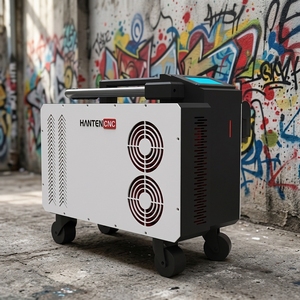
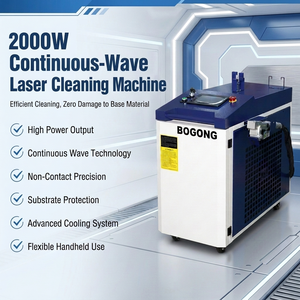
| High-Power CW Fiber Cleaner | 1064 nm | Oxidized Steel, Heavy Coatings, Architectural Stone | Non-abrasive rust, paint, and graffiti removal | Shipbuilding (Varna), Infrastructure Restoration |
| Cold UV Laser (3W - 10W) | 355 nm | Glassware, HDPE, Medical Polymers, Silicon Wafers | Zero Heat-Affected Zone (HAZ), micro-scale clarity | Pharma, Cosmetics, Beverage Bottling |
Primary Industrial Application Scenarios Serving Bulgaria
Tailored engineering deployments driving operational excellence across major Bulgarian manufacturing corridors.
1. Automotive OEM Supply Chain & DPM Serialization
In automotive clusters around Plovdiv and Sofia, compliance with ISO/TS 16949 requires direct part marking (DPM) of high-density DataMatrix codes on cast aluminum housings, brake calipers, and sensors. MOPA fiber lasers guarantee high-contrast readability even after extreme thermal or chemical stress.
2. Heavy Tooling & Mold Deep Engraving
Machinery manufacturers in Gabrovo and Ruse utilize 50W to 100W fiber laser engravers for deep mold marking, stamping die micro-engraving, and tool steel identification. 3D galvo optical heads maintain pin-sharp focus across multi-tiered or sloped tooling faces.
3. Architectural Stone & Historical Graffiti Restoration
Bulgarian municipal restoration projects and masonry specialists utilize mobile pulse fiber cleaning systems. These units safely remove urban paint pollution, graffiti, carbon deposits, and oxidation from historic limestone, marble, and concrete without chemical runoff or abrasive micro-cracking.
4. High-Throughput Metal Tube & Structural Profile Cutting
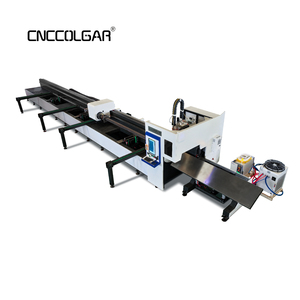
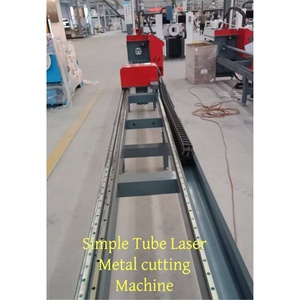
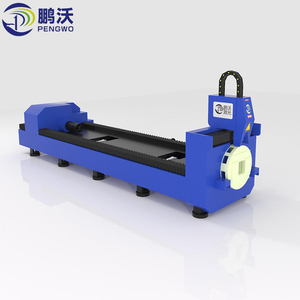
Bulgarian structural fabricators and agricultural equipment makers implement automatic fiber laser tube cutters (1.5kW to 12kW) with chuck openings up to 360mm. Intelligent CNC graphic software eliminates manual notch-cutting and speeds up assembly times.
Why Global Manufacturers Trust Our Fiber Laser Systems
Built to strict European engineering standards, backed by robust ISO 9001 certified manufacturing, and designed for 24/7 industrial operational stability.
ISO 9001 & CE Compliance
Every laser system is fully compliant with EU Machinery Directive 2006/42/EC and EN 60825-1 laser safety standards. Class 1 fully enclosed safety options feature certified interlocks and optical viewing windows.
Dynamic 3D Galvo Focusing
Integrated 3-axis dynamic beam expansion allows seamless laser marking across complex stepped surfaces, spheres, and sloped metal parts without requiring manual motorized Z-axis adjustment cycles.
Automation & Industry 4.0 Ready
Equipped with Ethernet/IP, TCP/IP, and PLC I/O protocols for seamless inline integration into automated cobot workstations, rotary indexers, or continuous conveyor lines with dynamic mark-on-the-fly (MOTF).
Frequently Asked Questions by Bulgarian Industrial Buyers
Expert answers addressing import standards, localized technical support, warranty terms, and system selection.
How are fiber laser machines shipped to Bulgaria, and what compliance documentation is provided?
All laser engraving and cutting systems shipped to Bulgaria are packed in IP66-rated international export crate enclosures. We provide full EU Declaration of Conformity documentation (CE marking), EN 60825-1 laser safety inspection certificates, ISO 9001 test reports, and complete English/Bulgarian technical manuals. Customs clearance support is provided to ensure smooth delivery straight to your facility in Sofia, Plovdiv, Varna, or regional industrial zones.
What is the practical difference between MOPA and conventional Q-Switched fiber lasers for metal marking?
While standard Q-switched fiber lasers operate at fixed pulse durations (typically around 100ns), MOPA fiber lasers allow operator adjustment of pulse widths from 2ns up to 500ns. Short pulse durations minimize thermal diffusion into the metal, allowing damage-free black annealing on medical-grade stainless steel (AISI 316L) and vibrant color marking on titanium. Longer pulse durations provide high-energy impact ideal for deep tool steel engraving.
What laser safety precautions are required for operating high-power laser cleaning equipment on-site?
For handheld pulse and continuous-wave (CW) cleaning lasers (such as 1000W - 3000W models), operators must wear OD6+ certified laser safety eyewear matching the 1064nm wavelength. For stationary installations inside factories, we recommend Class 1 fully enclosed workstations equipped with safety interlocks, optical safety glass windows, and high-volume industrial fume extractors to capture airborne particulate matter and fumes.
Can your fiber laser marking systems integrate directly into existing automated factory lines?
Yes. Our industrial control systems natively support I/O signals, RS232, TCP/IP, and Ethernet communication protocols. This allows our laser heads to interface directly with Siemens S7, Allen-Bradley, or Omron PLCs, enabling automated trigger signaling, dynamic database barcode population (GS1, DataMatrix, QR codes), and robotic arm synchronization (Cobot part loading/unloading).
What optical maintenance and consumable costs should we anticipate over a 5-year operating period?
Solid-state fiber laser engravers have zero internal consumables. Unlike CO2 lasers that require laser gas refills or optical alignment mirrors, fiber lasers transmit light via armored optical cable directly to sealed galvo heads. Maintenance is limited to periodically cleaning the protective cover lens on the F-Theta field lens using isopropyl alcohol and replacing air filters on the fume extraction unit.
What warranty coverage and remote technical assistance are available for enterprises in Bulgaria?
All equipment exported to Bulgaria includes a comprehensive 3-to-5 year warranty on core laser sources (Raycus, MAX, IPG, or JPT) and key optical components. Our dedicated engineering support team offers lifetime remote diagnostic assistance, video setup guidance, software training, and rapid spare-parts dispatch via express courier networks to ensure maximum factory uptime.