
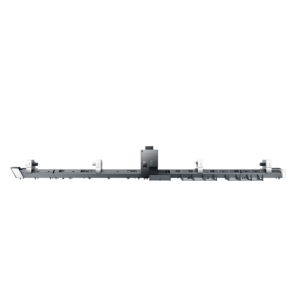
Featured Machinery Range
High-Precision Industrial Laser Cutting, Marking & Joining Platforms
Engineered for high throughput, micro-precision processing, and seamless factory integration across German manufacturing sectors.
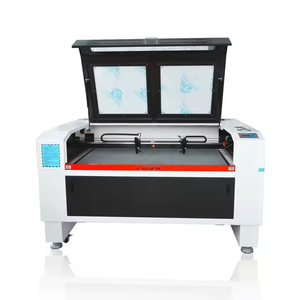
Fully automatic 6090/1390/1610 CO2 laser cutting machine for acrylic board
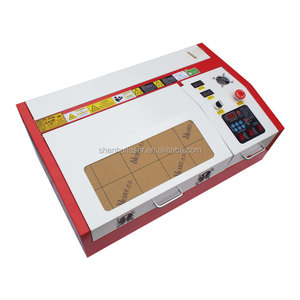
Desktop Seal Stamp Laser Engraving Machine
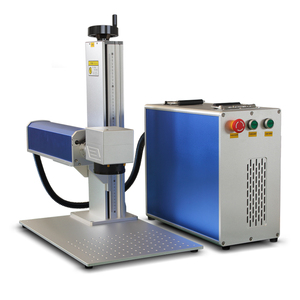
JNFSLASER Portable 60W/100W Raycus MAX M7 Source Mopa CNC Air-Cooled Metal Fiber Laser Marking Machine
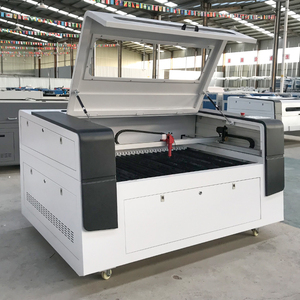
100W AI Laser Engraving Motor Metal Sheet Acrylic Plastic PVC Wood Paper CO2 Laser Cutting Machine
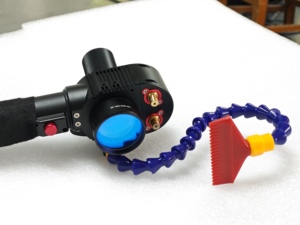
800g Lightweight 300W Handheld MOPA Pulse Laser Cleaning Gun DHCP30 Pro
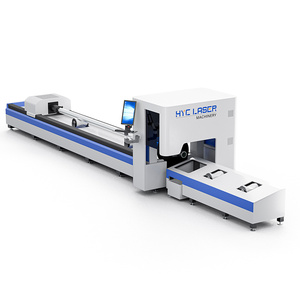
High-Quality Durable Multifunctional Fiber Laser Tube Cutting Machine For Industrial Metal Pipe Processing
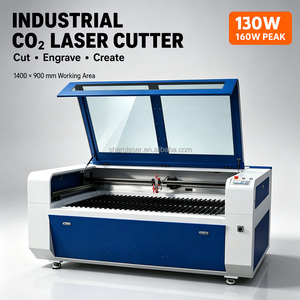
CO2 Laser Cutting & Engraving Machine 1490 with Ruida Control System Water Cooling
Executive Whitepaper: Industrial Laser Welding Machine Export Solutions for the German Market
In modern European manufacturing—specifically across Germany’s high-precision industrial corridors from Baden-Württemberg to North Rhine-Westphalia—the demand for advanced joining technology has evolved rapidly. Traditional metal joining techniques like Gas Tungsten Arc Welding (GTAW/TIG) and Metal Inert Gas (MIG) welding face increasing scrutiny due to their broad Heat-Affected Zones (HAZ), thermal distortion rates, excessive post-weld grinding requirements, and higher specific energy consumption per joint meter.
As a global leader in laser system manufacturing and an established laser welding machine exporter serving Germany, our engineering paradigm aligns strictly with German industrial norms (including DIN EN ISO 13919-1 for beam-welded joints in steel and titanium, and DIN EN ISO 15614-11 for laser beam welding procedure tests). Delivering maximum information gain for procurement specialists and plant automation directors, this comprehensive whitepaper outlines the physical, mechanical, operational, and regulatory dynamics required when importing high-performance fiber, MOPA, and CO2 laser systems into Germany.
Key Engineering Takeaway for German Buyers: Fiber laser joining technology provides power density exceeding 106 W/cm², shifting the welding dynamic from conduction-mode joining to deep-penetration keyhole mode. This results in aspect ratios up to 10:1, up to 80% reduction in heat input compared to conventional arc processes, and total elimination of structural workpiece warping.
Technical Fundamentals: Fiber vs. MOPA vs. CO2 Laser Joining & Processing Mechanisms
Selecting the optimal laser source for European production lines requires evaluating wavelength absorption coefficients, beam quality factors (M²), pulse frequency modulation ranges, and dynamic thermal transfer characteristics. Below is an engineering overview of the primary laser architectures exported to German manufacturing enterprises:
Continuous Wave (CW) Fiber Lasers
Operating at ~1070 nm wavelength, CW fiber lasers deliver ultra-stable power output ranging from 1 kW to 12 kW. Ideal for high-speed structural seam welding in automotive body-in-white (BIW), battery pack enclosures, and heavy stainless steel pressure vessels.
MOPA & Pulsed Fiber Lasers
Featuring Master Oscillator Power Amplifier architecture with adjustable pulse duration (2 ns to 500 ns) and frequency up to 4 MHz. Essential for micro-welding dissimilar metals, thermal-sensitive electronics, battery tab joining, and non-destructive surface cleaning.
Precision CO2 Laser Systems
Generating a 10.6 µm wavelength, CO2 laser platforms offer exceptional edge quality for non-metallic processing, organic polymers, acrylics, and specialized wood/die-board cutting, complemented by advanced Ruida numeric control integration.
Technical Specification Comparison for Export Systems
To assist German industrial engineers in system selection and qualification, the following matrix compares core operational parameters across our exported machinery line:
| Technology Type | Wavelength / Source | Target Materials (Germany Focus) | Welding Depth / Capability | Standard Compliance |
|---|---|---|---|---|
| High-Power CW Fiber Welder | 1070 nm (Single/Multi-Mode) | Stainless Steel (1.4301/1.4404), Carbon Steel, Aluminum Alloys | 0.5 mm – 8.0 mm Keyhole Weld | CE, DIN EN ISO 13919-1, TUV Testable |
| Pulsed MOPA Micro-Welder | 1064 nm (Variable Pulse Width) | Copper-to-Aluminum, Battery Tabs, Medical Titanium Grade 5 | 0.05 mm – 1.2 mm Precision Seam | ISO 9001, CE Low Voltage Directive |
| Air-Cooled Handheld Laser System | 1070 nm (Raycus/Max/IPG) | Sheet Metal Fabrication, HVAC Ducts, Custom Enclosures | 0.5 mm – 4.0 mm Manual Wobble Weld | EN 60825-1 Class 4 (With Safety Enclosure) |
| CO2 Galvo & Flatbed Cutter | 10.6 µm Sealed RF / Glass Tube | Acrylic, Wood, Polymers, Technical Textiles, Gaskets | Up to 25 mm Cutting (Non-Metal) | CE Compliant, Machinery Directive 2006/42/EC |
Localized Application Scenarios in German High-Tech Sectors
Germany’s manufacturing economy relies on regional clusters of excellence. As a specialized laser welding machine exporter serving Germany, our machine architectures are custom-configured to solve specific engineering hurdles across key federal states (Bundesländer):
Baden-Württemberg & Bavaria: Automotive & E-Mobility
In Stuttgart, Munich, and Nuremberg, automotive Tier-1 suppliers utilize our automated wobble fiber laser welding heads to join copper hairpins in electric motor stators and seal aluminum battery module housings with zero porosity (conforming to VDA quality standards).
Tuttlingen & North Rhine-Westphalia: Medical Devices
Medical technology clusters require airtight, hermetic seams on surgical endoscopes, pacemaker casings, and titanium implants. Our micro-spot MOPA pulsed laser systems deliver crack-free joining under strict cleanroom conditions without compromising biocompatibility.
Saxony (Silicon Saxony): Precision Micro-Electronics
Around Dresden and Leipzig, microelectronics assembly lines deploy our 3D UV laser markers and micro-welding stations for fine sensor encapsulation, lead-frame joining, and thermal-barrier-free component sealing.
Engineering Deep-Dive: Overcoming the Reflectivity Barrier in Copper & Brass Joining
A major challenge for German electrical component manufacturers is welding highly reflective non-ferrous metals like oxygen-free copper (Cu-ETP) and brass (CuZn37). At 1070 nm wavelength, solid copper reflects over 90% of incident laser energy at room temperature, often leading to beam back-reflection, optic element contamination, and unstable weld pools.
Our exported laser welding systems solve this through two primary technological innovations:
- Galvanometer Wobble Welding Heads: By superimposing circular, figure-8, or sinusoidal oscillation patterns onto the focused beam (at frequencies up to 1000 Hz), the thermal pool is dynamically agitated. This stabilizes keyhole key-venting, escapes entrapped shield gas, and reduces spatter by up to 95%.
- High-Peak-Power Pulse Shaping (MOPA Technology): Initiating the pulse sequence with an ultra-high energy spike rapidly breaks the room-temperature reflectivity threshold, instantly shifting metal absorptivity into the 40%+ zone before transitioning to a smooth sustaining energy profile.
Local Industry Trends & Regulatory Driving Forces in Germany
German factory managers facing energy transition objectives (Energiewende) and strict labor safety guidelines require machinery suppliers who anticipate regulatory shifts. Importing laser equipment into the Federal Republic of Germany involves meeting several critical standards:
EN 60825-1 Laser Safety & Class 1 Enclosures
German Occupational Safety (Betriebssicherheitsverordnung) mandates strict optical radiation safety. Our export laser workstations are engineered for easy integration into interlocked Class 1 safety enclosures featuring laser-certified protective viewing glass (OD6+ rating).
Industry 4.0 & Siemens Profinet Integration
Modern German manufacturing demands real-time telemetry. Our control architectures support Siemens S7 PLCs, Profinet, EtherCAT, and OPC UA protocols, allowing remote monitoring of laser power, chiller temperatures, and weld seam quality tracking.
Energy Decarbonization & High Wall-Plug Efficiency
With electricity costs taking center stage in German operations, our fiber laser systems achieve electrical wall-plug efficiency (WPE) exceeding 35–40%, dramatically reducing annual kWh consumption compared to legacy flashlamp-pumped Nd:YAG lasers.
Strategic Export Partner Note: We provide full technical documentation package in German and English, including Risk Assessments conforming to DIN EN ISO 12100, Declarations of Conformity under Machinery Directive 2006/42/EC, and full circuit schematics for local TÜV compliance audits.
Enterprise Strengths & Global Supply Capabilities
Backed by over three decades of cumulative laser engineering heritage, our organization operates as a premier designer, builder, and international exporter of laser processing equipment. We serve client networks across 46 countries with robust engineering support, ISO 9001 certified quality controls, and custom automation capabilities.
ISO 9001 & ISO 14001 Quality Management
Every laser system undergoes rigorous multi-point factory acceptance testing (FAT), including optical beam profiling, 72-hour burn-in stress testing, and insulation resistance checks prior to international crating.
3D Dynamic Focusing Systems
Incorporating 3-axis galvo dynamic beam delivery, our systems maintain razor-sharp focal spot control across multi-level workpieces, cylinder pipes, curved molds, and complex 3D surface topographies without mechanical re-tooling.
Bespoke Automation & Cobot Integration
Our dedicated R&D engineering division designs turnkey automated cells—from pneumatic plate loaders and rotary indexing tables to 6-axis collaborative robot (COBOT) arm loading suites for 24/7 lights-out production.
Procurement FAQ
Frequently Asked Questions by German Importers & Engineers
Clear, direct answers regarding international logistics, technical safety standards, warranty coverage, and localized servicing across Europe.
What specific CE directives and DIN standards do your laser welding machines meet?
Our laser welding equipment complies fully with European CE directives, including the Machinery Directive 2006/42/EC, Low Voltage Directive 2014/35/EU, and Electromagnetic Compatibility (EMC) Directive 2014/30/EU. Furthermore, system safety design aligns with optical hazard standards EN 60825-1 and risk evaluation protocol DIN EN ISO 12100. Complete technical construction files (TCF) and CE Declarations of Conformity are supplied with every exported unit.
How is technical support, installation, and spare parts supply handled in Germany?
We support German clients through a dual-layer service framework. Remote diagnostics, PLC telemetry troubleshooting, and operational training are managed instantly via encrypted online tools. Physical servicing, installation commissioning, and preventative maintenance are backed by fast-dispatch spare parts warehouses servicing the EU, ensuring critical consumables (focal lenses, protective windows, nozzles) arrive within 24–48 hours.
Can we send sample material parts for welding validation before placing a firm order?
Yes, absolutely. We encourage prospective buyers to utilize our Applications Engineering Laboratory. German companies can send their sample workpieces (e.g., stainless steel housings, copper electrical tabs, or titanium tubes). Our team will perform trial welds using various laser wavelengths, wobble frequencies, and shielding gases, returning a comprehensive metallurgy report with cross-sectional optical microscopy, tensile test data, and recommended machine configurations.
What shielding gas flow and composition do you recommend for laser welding stainless steel vs. aluminum?
For austenitic stainless steel (e.g., 1.4301/304 or 1.4404/316L), high-purity Argon (Grade 4.6 or higher) at a flow rate of 12–20 L/min provides excellent oxidation prevention and bright bead finish. For structural aluminum alloys (such as 6061 or 5083), an Argon-Helium mix (e.g., 50/50) is frequently recommended to boost thermal conductivity, minimize surface tension, and prevent keyhole collapse or porosity formation during high-speed processing.
What warranty terms apply to international machinery buyers in Germany and the EU?
All exported machinery supplied to Germany includes a standard 2-Year to 3-Year comprehensive international warranty covering laser sources (Raycus, MAX, IPG), optical galvo heads, chillers, and CNC controllers. Extended warranty cover options up to 5 years are available under OEM service agreements, supported by direct technical backup from our engineering headquarters.
How are customs clearance, customs duty, and import logistics managed when shipping to Germany?
We offer flexible Incoterms including FOB, CIF, and DDP (Delivered Duty Paid) via major European ports such as Hamburg, Bremerhaven, or Frankfurt Airport. Under DDP terms, our logistics partners manage import customs clearance, land transport, and customs tariff handling directly to your factory door, eliminating administrative burdens for your procurement team.
Ready to Upgrade Your Manufacturing Line in Germany?
Contact our laser application specialists today to discuss machine customization, request sample weld testing, or receive a formal export quotation.
Contact Us