
Advanced Industrial Laser Welding & Processing Systems
Engineered for maximum reliability, extreme precision, and seamless integration into automated production lines across Ireland and Europe.
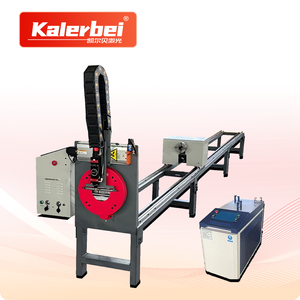
Mini CNC Automatic Fiber Laser Tube Cutter - Small-Diameter Pipe Fabrication
Send an Inquiry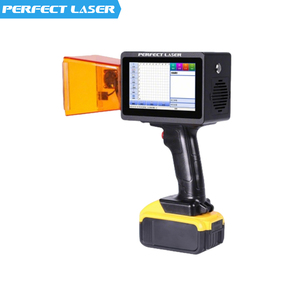
Handheld Portable Metal & Acrylic Fiber Laser Marking Machine with LCD
Send an Inquiry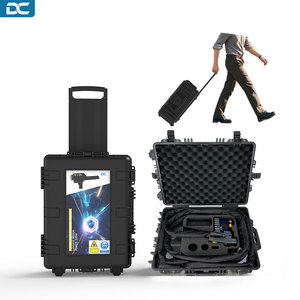
500W Portable Pulsed Fiber Laser Cleaner for Metal & Surface Restoration
Send an Inquiry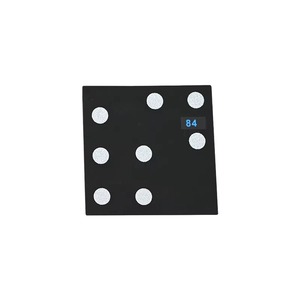
8-Point Magnetic Coded Reflective Positioning Markers for Laser 3D Scanning
Send an Inquiry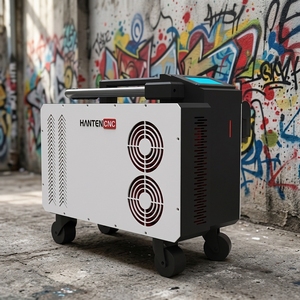
Portable Pulse Laser Cleaning Equipment for Stone & Wall Surface Restoration
Send an Inquiry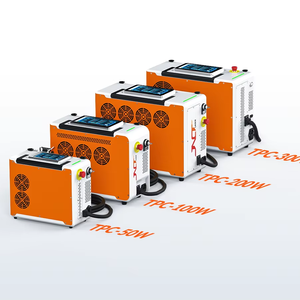
300W Heavy-Duty Pulsed Laser Cleaning Solution – Zero Consumables
Send an Inquiry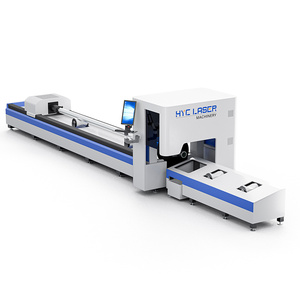
High-Precision Fiber Laser Tube Cutting Machine for Industrial Metal Processing
Send an Inquiry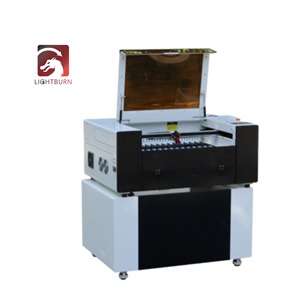
SM-Pro Series 1000x600mm CO2 Laser Engraving Cutting Machine (50W-130W)
Send an InquiryThe Paradigm Shift in Ireland’s Precision Metal & Laser Fabrication Landscape
Ireland has established itself as one of Europe's premier advanced manufacturing, medical technology, and pharmaceutical hubs. From the high-density MedTech innovation corridors in Galway and Limerick to the heavy precision engineering facilities in Cork, Dublin, and Shannon, manufacturing enterprises face accelerating pressure to upgrade from conventional TIG (Tungsten Inert Gas) and MIG (Metal Inert Gas) arc welding to ultra-precise, automated Fiber Laser Welding Systems.
Laser welding technology leverages high-power density coherent light sources to generate narrow, deep keyhole welds with minimal heat input. For Irish original equipment manufacturers (OEMs) and contract sub-contractors operating under stringent European framework standards, laser welding delivers unmatched structural integrity, aesthetic weld profile consistency, and drastically reduced thermal distortion on sensitive thin-gauge alloys, stainless steels, titanium, and non-ferrous metals.
Key Takeaway for Irish Plant Managers & Technical Directors
Transitioning to fiber laser welding eliminates up to 85% of post-weld grinding and polishing overheads while boosting linear processing speed by 400% to 1000%. This provides Irish manufacturing plants with a significant competitive advantage in labor utilization and operational cost efficiency.
Localized Industrial Application Scenarios in Ireland
Our industrial fiber laser welding, cutting, and surface preparation machinery is specifically tailored to meet the exacting quality management requirements (ISO 13485 and ISO 9001) of Irish industrial hubs:
Medical Device Manufacturing (Galway & Dublin Corridor)
Hermetic seam welding of surgical instruments, titanium implants, catheter assemblies, and 316L medical stainless steel tubing with zero heat-affected zone (HAZ) damage and zero particulate contamination.
Pharma & Bio-Processing Vessels (Cork & Ringaskiddy Cluster)
Ultra-clean sanitary orbital joining of 904L and 316L stainless steel fluid conduits, reaction vessels, and heat exchangers requiring zero internal crevice formation for CIP/SIP sterilization compliance.
Precision Automotive & EV Battery Packs (Midwest & Shannon)
High-speed dissimilar metal laser welding (Copper busbars to Aluminium battery terminals) utilizing continuous wave (CW) wobble laser heads to mitigate porosity and spatter.
Technical Benchmark: Fiber Laser Welding vs. Traditional TIG / MIG Welding
To help engineers and procurement teams evaluate ROI, the following matrix contrasts high-power fiber laser welding with legacy manual arc techniques across key operational metrics:
| Performance Feature | High-Power Fiber Laser Welding | Traditional TIG (GTAW) Welding | Standard MIG (GMAW) Welding |
|---|---|---|---|
| Welding Processing Speed | Extreme (Up to 120 mm/s) | Slow (15 - 25 mm/s) | Moderate (30 - 40 mm/s) |
| Heat Affected Zone (HAZ) | Ultra-Narrow (< 0.2 mm) | Extensive / Broad | Broad / High Distortion |
| Post-Weld Processing | None to Minimal (Clean Seam) | Heavy Grinding & Polishing | Heavy Deslagging & Cleaning |
| Operator Skill Requirement | Low (Rapid 1-Day Training) | Very High (Certified Welder) | Moderate to High |
| Thermal Distortion | Near Zero (Micro-Level) | High Component Warp | High Component Warp |
| Automation Compatibility | Native CNC / Robotic Integration | Complex / Limited Speed | Moderate Robotic Integration |
Why Leading Irish Manufacturers Partner with Our Brand
With over three decades of optical, mechanical, and software laser platform engineering, our laser systems are built to withstand 24/7 industrial production environments. Every system delivered to Ireland complies strictly with European safety directives and CE certification standards.
CE Compliant & Safety Certified
Fully enclosed Class 1 laser safety options, safety interlocks, optical viewing windows, and integrated fume extraction compatibility compliant with EN 60825-1 laser safety standards.
Advanced 3-Axis & Wobble Welding Heads
Equipped with motorized optical galvanometers and multi-pattern wobble heads (Line, Circle, Double-Circle, Triangle) to effortlessly bridge fit-up gaps up to 2.5 mm without filler wire.
Smart CNC & Industrial Automation Ready
Seamless communication interfaces supporting EtherCAT, Modbus, and PROFINET for quick coupling with 6-axis cobot arms, linear gantries, and automated rotary chuck fixtures.
Frequently Asked Questions (FAQ) for Irish Purchasing Managers
Here are direct technical insights addressing common queries from engineering and procurement specialists across Ireland.
Which shielding gas is recommended for fiber laser welding stainless steel in Ireland?
High-purity Argon (99.999%) or Nitrogen is standard. Argon yields excellent plasma suppression and smooth surface topography. For food-grade and pharmaceutical stainless steel applications common in Munster and Leinster plants, Nitrogen can increase austenitic stability and improve weld corrosion resistance.
What electrical power supply is required for your industrial laser welding machines in Ireland?
Our standard handheld wobble laser welders (1000W to 2000W) operate on standard single-phase 230V 50Hz supply, while high-power continuous laser welding systems (3000W+) utilize standard Irish industrial 3-phase 400V 50Hz electrical connections.
Can your laser welding systems handle highly reflective non-ferrous metals like Copper and Brass?
Yes. By pairing optical isolation protection with custom wave-modulated MOPA fiber sources or advanced wobble beam delivery, our laser welders prevent back-reflection damage and ensure stable laser keyhole formation even on pure C11000 copper and architectural brass.
What direct technical support and operator training do you provide for customers in Ireland?
We provide full installation guidance, operational parameter libraries for common material gauges, preventative maintenance schedules, and rapid spare parts dispatches backed by dedicated laser application specialists.
How does laser cleaning pre-treatment improve laser weld quality?
Utilizing pulsed laser cleaning machines (such as our 300W and 500W pulsed units) to remove oxidation, grease, paints, and surface contaminants prior to laser welding eliminates porosity, micro-cracking, and seam inclusion defects in critical structural joints.
Transform Your Metal Fabrication & Production Capabilities in Ireland
Contact our laser application engineers today to discuss your material parameters, request a complimentary sample test mark or weld validation report, or receive a fast direct quote.