
Featured Laser Marking, Engraving & Cleaning Equipment
Engineered for high-throughput medical part serialisation, surgical instrument coding, non-metallic part cutting, and surface decontamination.
1. Executive Summary & Regulatory Mandates in the Pakistan Medical Market
The global medical device sector is undergoing an unprecedented shift toward mandatory, end-to-end component traceability. In Pakistan, where the city of Sialkot stands as one of the world's most vital hubs for surgical instrument manufacturing—accounting for over 70% of global hand-held surgical instrument exports—compliance with international regulations is no longer optional. Export markets such as the European Union (under EU MDR 2017/745) and the United States (under US FDA 21 CFR 830) require mandatory Unique Device Identification (UDI) directly etched onto reusable surgical tools, implants, diagnostic apparatus, and medical packaging.
Concurrently, the Drug Regulatory Authority of Pakistan (DRAP) under the Medical Devices Rules (2017) has increasingly aligned national standards with global Medical Device Single Audit Program (MDSAP) directives. Medical device factories in Karachi, Lahore, Rawalpindi, and Sialkot are required to ensure that every device leaving their facilities carries a machine-readable GS1 DataMatrix code, direct part marking (DPM), and serialisation code that remains legible through hundreds of autoclave sterilization cycles.
Core Industry Mandate: Direct Part Marking (DPM) on medical instruments must achieve high contrast, pass passivation tests, resist acid cleaning, and preserve the passive oxide layer of stainless steel (AISI 304, 316L, 420, 630) to eliminate any risk of post-process corrosion or bacterial harborage.
As a specialized OEM factory and global machinery supplier, our laser systems are specifically designed to address these stringent physiological, mechanical, and regulatory challenges. By integrating advanced MOPA (Master Oscillator Power Amplifier) fiber lasers, cold UV (Ultraviolet) lasers, 3-axis dynamic focal control, and automated vision verification, we provide manufacturers across Pakistan with complete, compliant, and cost-effective laser marking solutions.
2. Sialkot & Broader Pakistan Medical Manufacturing Dynamics
The industrial landscape of Pakistan presents unique operational conditions. Sialkot alone hosts thousands of small, medium, and large-scale manufacturing enterprises dedicated to crafting surgical forceps, hemostats, scalpels, bone chisels, speculums, dental elevators, and titanium orthopedic bone plates. Furthermore, medical plastic injection molding and pharmaceutical packaging plants in Lahore and Karachi require rapid inline coding on heat-sensitive polymers, PEEK, PVC, silicone, and clear glass ampoules.
Surgical Instruments Cluster (Sialkot)
High-volume processing of martensitic and austenitic stainless steel. Demands dark black annealing marks that survive citric/nitric acid passivation without surface micro-cracking.
Orthopedic Implants & Titanium
Implantable medical devices (bone screws, joint prostheses) require biocompatible titanium anodizing or laser color-marking without structural material degradation.
Medical Polymers & Packaging
Catheters, IV bags, syringe barrels, and blister packs require "cold" UV laser marking to prevent thermal deformation, charring, or pinhole leaks.
Key economic factors in Pakistan—such as ambient temperature variations, grid power fluctuations, and the need for simplified maintenance—require laser hardware engineered to industrial-grade standards. Our machines feature heavy-duty extruded aluminum chassis, IP54 optic enclosures, optical isolators against back-reflection, and low energy consumption, ensuring maximum uptime and long operational lifespan.
3. Technical Deep-Dive: Laser-Material Interaction & Metallurgy
Achieving successful medical traceability requires understanding the physics of laser-material interactions. Traditional standard Q-switched fiber lasers rely on high peak energy that vaporizes material, creating micro-cavities and removing the chromium-rich oxide film that protects stainless steel from rust. In contrast, our advanced MOPA Fiber Laser and UV Laser systems offer precise control over pulse duration, frequency, and beam energy delivery.
3.1 Black Annealing vs. Traditional Engraving
Black annealing is the gold standard for stainless steel medical instruments. By utilizing adjustable pulse durations (from 2ns to 500ns) on a MOPA laser, thermal energy is gently coupled into the sub-surface layer of the steel. This induces controlled thermal oxidation, forming a smooth, dark, non-reflective chromium oxide coating without removing substrate material.
| Parameter / Metric | Standard Q-Switched Fiber Laser | Lotus MOPA Fiber Laser | 355nm Cold UV Laser Marker |
|---|---|---|---|
| Pulse Width Control | Fixed (~100ns – 120ns) | Variable (2ns to 500ns) | Short Picosecond / Nanosecond |
| Corrosion Resistance | Low (Vaporization damages passive film) | Extremely High (Preserves passive layer) | N/A (Designed for polymers/glass) |
| Autoclave Resistance | Fades after 20–50 cycles | Intact after 1000+ cycles | High on biocompatible plastics |
| Heat Affected Zone (HAZ) | Large (Risk of micro-fractures) | Minimal / Controlled | Zero Thermal Impact (Cold Process) |
| Target Materials | General metals, carbon steel | Medical stainless, Titanium, Anodized Al | PEEK, PTFE, HDPE, Glass, Silicon |
3.2 Cold Laser Marking with 355nm UV Source
When marking medical catheters, tubing, and surgical handles made of PEEK (Polyether ether ketone), ABS, or Teflon, thermal energy causes melting, charring, and gas release. Our 355nm UV laser systems operate via photochemical decomposition. Instead of heating the material, the high-energy UV photons break molecular bonds directly within the polymer. This produces ultra-crisp, high-contrast black or white marks down to 10 microns in character height with zero thermal distortion, satisfying medical cleanroom standards.
4. Complete Application Scenarios for Pakistan Manufacturers
Our laser systems cater to specific production workflows found across Pakistan's industrial sectors. Below are primary operational applications where our marking systems provide unmatched value and compliance reliability.
GS1 DataMatrix Marking on Curved Scissor Handles
Equipped with 3D Dynamic Focus Galvo technology, our laser markers dynamically adjust focal length across curved surfaces (up to ±40mm depth of field). This ensures uniform micro DataMatrix codes on curved surgical scissors and forcep shanks without manual stage adjustment.
UDI Coding on Titanium Bone Screws & Plates
Sub-nanosecond MOPA pulse shaping allows brilliant color-coding and high-density serial number annealing on Grade 5 Titanium implants. Colors can indicate screw lengths or batch codes while keeping the surface smooth and biocompatible.
Inline High-Speed Coding on Pharmaceutical Blister Packs
The Meta-i inline laser coding head integrates seamlessly onto packaging lines in Karachi and Lahore, executing real-time variable data marking (lot numbers, expiration dates, barcodes) at linear speeds exceeding 120 meters per minute.
Cleanroom Micro-Marking on PEEK Catheters
Using our UV cold laser, medical catheter manufacturers in Sialkot can print length markers, directional arrows, and lot numbers on flexible tubing without altering outer diameter tolerances or creating rough edges.
Laser Rust & Decontamination Cleaning
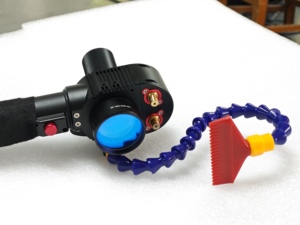
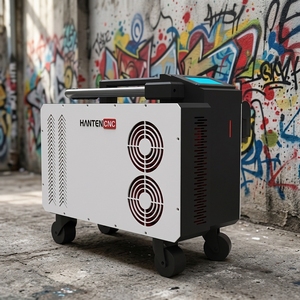
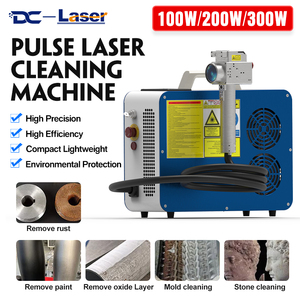
Prior to marking and final passivation, our handheld MOPA laser cleaning systems (50W to 300W) quickly strip oil, oxide layers, weld scale, and polishing compound residue from complex surgical forgings.
Automated Data Plate & Tray Marking
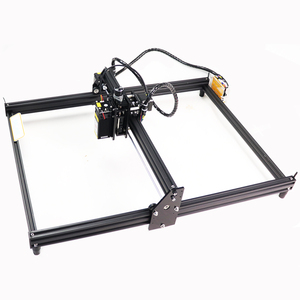
For large surgical tray manufacturers, our automated XY batch markers allow operators to load hundreds of tools or rating plates simultaneously, automating marking cycles via single-button operations.
5. Enterprise Advantages & Manufacturing Standards
Choosing a reliable OEM equipment factory is essential for long-term production stability. As an established global manufacturer, our business model and engineering standards provide significant advantages over general trading companies or unverified suppliers.
5.1 3D Marking Capability as Standard
Most standard laser marking machines utilize a static 2D f-theta lens, forcing operators to manually adjust height or struggle with out-of-focus edges on curved surgical tools. Our flagship Meta range features integrated 3-axis optical beam delivery. The system maintains laser spot focus automatically across stepped, inclined, cylindrical, or spherical geometry in a single automated cycle.
5.2 ISO 9001 Quality Assurance & CE Compliance
Every system undergoes rigorous quality checks prior to dispatch, including optical power stability testing, 48-hour continuous burn-in, laser safety interlock verification, and EMC compliance testing. Our factory operates under an accredited ISO 9001 Quality Management System, ensuring every laser marker meets exact European CE safety and performance standards.
5.3 Robust Hardware Architecture & Long Service Life
Built using military-grade structural aluminum frames, high-precision linear guides, digital high-speed galvanometers, and premium IPG / JPT / Raycus laser sources, our workstations carry an operational design lifespan exceeding 15 years (100,000+ laser diode hours). Maintenance is minimal, requiring no consumables or frequent calibration.
Sample Testing Validation: We offer a free, no-obligation material sample marking service. Factory engineers in Pakistan can send sample instruments to our lab for sample testing, corrosion resistance validation, and optical readability verification before placing an order.
6. Frequently Asked Questions (FAQ) for Pakistan Buyers
Here are clear, engineering-backed answers to common questions asked by procurement directors, quality control managers, and factory owners in Pakistan.
Which laser source is best for Sialkot surgical instrument manufacturing?
A 20W to 50W MOPA Fiber Laser is highly recommended for surgical instruments. Unlike standard Q-switched fiber lasers, MOPA lasers allow fine tuning of pulse widths (down to 2ns), enabling deep black annealing on stainless steel without puncturing the anti-corrosive passivation layer.
How do your machines ensure UDI compliance for export to US and European markets?
Our EZCAD3 / LightBurn software suite supports direct generation of 2D GS1 DataMatrix, QR codes, HIBC (Health Industry Bar Code), and alphanumeric serial strings. When paired with our high-resolution galvos, codes meet ISO/IEC 15415 grade A and B readability standards.
What support, shipping, and installation options are available for Pakistan?
We provide full export support serving the Pakistan market, including complete documentation (Certificate of Origin, CE declaration, HS coding for Customs clearance at Lahore, Karachi, or Islamabad airports/ports). Technical installation and staff training are backed by video tutorials, remote desktop diagnostic software, and regional service partners.
Do I need a cold UV laser instead of a fiber laser?
If your primary materials are stainless steel, titanium, or aluminum, a MOPA fiber laser is ideal. If you mark heat-sensitive polymers, silicon catheters, glass ampoules, or thin foil packaging where heat charring is unacceptable, a 355nm UV cold laser marker is the required solution.
How do laser marks stand up against repeat autoclave sterilization?
Properly annealed laser marks created with our MOPA fiber machines alter the oxide layer under controlled thermal energy without micro-fracturing the surface. These marks resist repeated chemical disinfection, citric acid passivation baths, and over 1,000 steam autoclave cycles without fading or rusting.
Can these machines be integrated into automated conveyor or robotic lines?
Yes. Our Meta-i inline systems and automation-ready controllers support I/O signals, RS232/RS485 communication, TCP/IP networking, and COBOT integration for continuous, unattended batch production.
Ready to Upgrade Your Medical Traceability & Laser Marking Infrastructure?
Contact our applications team today for expert technical advice, custom automated machine configuration, or a free sample marking test tailored for the Pakistan market.