CO2 Medical Packaging & Tooling Laser Marking Machine (100W-300W)
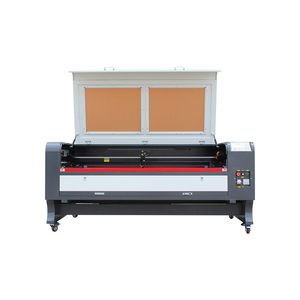
Designed for high-speed non-contact coding on organic medical packaging, acrylic housings, and sterile tubing trays. Delivers sharp GS1 DataMatrix codes.
Send an InquiryExplore our high-performance MOPA fiber, UV cold laser, and CO2 marking platforms certified for permanent direct part marking on surgical instruments, implants, bio-polymers, and medical packaging.
Designed for high-speed non-contact coding on organic medical packaging, acrylic housings, and sterile tubing trays. Delivers sharp GS1 DataMatrix codes.
Send an Inquiry
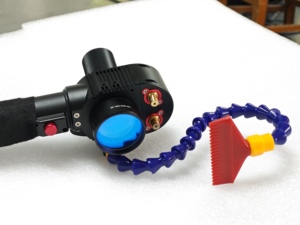
Ultra-lightweight 800g ergonomics with built-in blowing air. Ideal for large medical equipment frames, pre-weld cleaning, and field-service part traceability.
Send an Inquiry
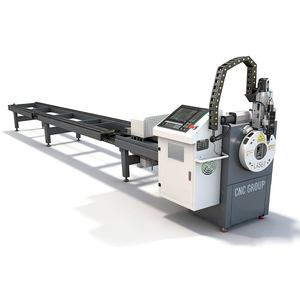
High-repeatability laser cutting platform engineered for stainless steel hypotubes, nitinol stents, and catheter shafts with burr-free microscopic edge clarity.
Send an Inquiry
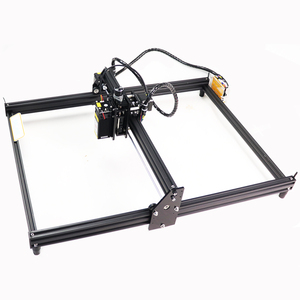
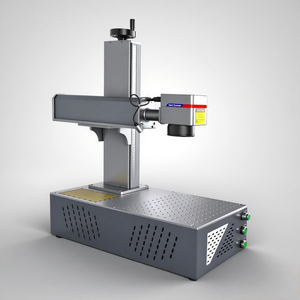
Compact air-cooled workstation with AI vision assistance. Engineered for R&D labs and small-batch micro-marking on polymer medical components.
Send an Inquiry
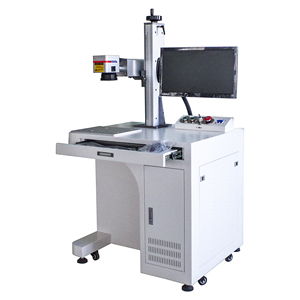
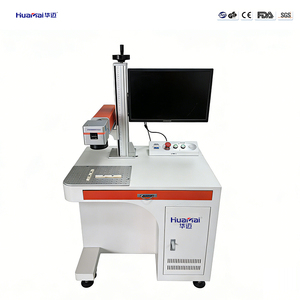
Fully enclosed, operator-safe laser marker with integrated computer control. Built specifically for cleanroom environments and titanium implant coding.
Send an Inquiry
Advanced pulse duration control enabling corrosion-resistant black annealing and color identification on 316L stainless steel surgical instruments.
Send an Inquiry
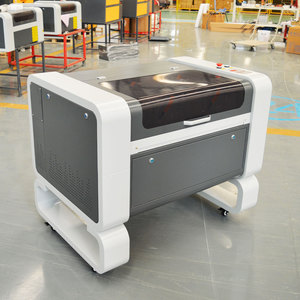
Dual-purpose platform for high-precision vector cutting and raster marking on medical-grade silicone, PTFE, acrylics, and sterile packaging films.
Send an Inquiry
Dynamic 3-axis galvo head system capable of maintaining focused laser density across curved, multi-tiered orthopedic bone plates and joint replacements.
Send an InquiryRomania has rapidly positioned itself as one of Eastern Europe’s fastest-growing medical device manufacturing hubs. Driven by nearshoring strategic investments across major industrial corridors such as Cluj-Napoca, Timișoara, Bucharest, Brașov, and Iași, contract manufacturers (CMOs) and OEM brands are expanding production facilities to supply the European Union market. However, export authorization under the European Medical Device Regulation (EU MDR 2017/745) demands total lifecycle product traceability.
The Romanian National Agency for Medicines and Medical Devices (ANMDMR - Agenția Națională a Medicamentului și a Dispozitivelor Medicale din România) strictly enforces compliance with Unique Device Identification (UDI) mandates. Under EU MDR Article 27, medical devices—ranging from reusable surgical instruments and dental burrs to class III orthopedic implants and cardiac catheters—must carry an indelible, machine-readable GS1 DataMatrix code directly on the device surface (Direct Part Marking / DPM).
Achieving a compliant UDI mark is not merely a cosmetic requirement; it is a critical metallurgical process. Medical-grade stainless steel (such as AISI 316L, 316LVM, 17-4 PH, and 420 steel) relies on a passive chromium oxide ($\text{Cr}_2\text{O}_3$) layer for corrosion resistance. Traditional continuous-wave lasers or aggressive deep-engraving systems heat the substrate beyond critical thresholds, causing carbon precipitation, chromium depletion, and destruction of the passive layer. When exposed to repeated autoclaving cycles ($134^\circ\text{C}$ steam sterilization) or aggressive chemical passivation baths (citric acid or nitric acid under ASTM A967), compromised marks rust, corrode, and fail inspection.
Our proprietary MOPA (Master Oscillator Power Amplifier) fiber laser systems allow microsecond control over pulse duration (ranging from 2ns to 500ns). By utilizing ultra-short pulse widths at high peak power, our laser markers induce controlled subsurface thermal oxidation—creating a deep, high-contrast matte black mark without melting or micro-fracturing the passive chromium oxide layer. The resulting GS1 DataMatrix codes withstand 1,000+ autoclave cycles and pass rigorous nitric acid passivation testing without pitting or corrosion.
Selecting the appropriate laser source is vital for meeting ISO 13485 quality standards and preventing material degradation. The table below highlights key performance attributes across laser wavelengths:
| Technology / Wavelength | Compatible Materials | Thermal Impact / HAZ | Autoclave & Passivation Resistance | EU MDR UDI Suitability |
|---|---|---|---|---|
| MOPA Fiber Laser (1064nm) | Stainless Steels (316L, 17-4PH), Titanium Gr 5, Nitinol, CoCr | Controlled / Ultra-Low (via short nanosecond pulses) | ✓ Superior (Black Anneal) | Ideal for Reusable Surgical Tools & Implants |
| UV Cold Laser (355nm) | PEEK, Polycarbonate, ABS, Silicone, Glass, Thin Films | Zero (Photochemical Cold Ablation) | ✓ Excellent (No Material Degradation) | Ideal for Catheters, Syringes & Cleanroom Polymers |
| Standard Q-Switched Fiber (1064nm) | General Metals, Anodized Aluminum | High Heat-Affected Zone (HAZ) | Poor (Prone to Rust & Corrosion) | Not Recommended for Class IIb/III Devices |
| CO2 Laser (10,600nm) | Organic Packaging, Paper, Glass, Acrylic Enclosures | Moderate Thermal Vaporization | N/A (Packaging Level) | Ideal for Secondary & Tertiary Packaging Serialization |
Our tailored laser marking workstations cater directly to the specialized production lines operating within Romania’s principal industrial regions.
Manufacturers in the western industrial centers producing titanium alloy (Ti-6Al-4V ELI) hip stems, cranial mesh, and trauma screws require non-destructive 3D direct part marking. Our 3D Dynamic Focus MOPA fiber systems deliver precise GS1 DataMatrix codes on complex, curved implant geometry without changing focal planes manually, ensuring high optical readability under automated vision inspection.
For medical plastics production in the capital zone—utilizing medical-grade PEEK, polyurethane, high-density polyethylene (HDPE), and fluoropolymers—thermal heat causes micro-cracking and gas release. Our 355nm UV cold laser markers perform photochemical color change (cold marking) with sub-micron line width, creating ultra-crisp UDI codes without disturbing smooth surface integrity.
Small-diameter dental scalers, burs, and endodontic files manufactured in central Romania present micro-surface challenges. Lotus Laser’s ultra-fine spot size (down to $15\,\mu\text{m}$) enables high-density 2D DataMatrix code engraving down to $0.8\text{mm} \times 0.8\text{mm}$, ensuring complete compliance with ISO 21531 dental instrument standards.
Pharmaceutical packaging facilities requiring rapid dynamic serialization benefit from our inline CO2 laser markers. Integrating seamlessly with automated cartoning machinery, our systems apply real-time variable batch data, expiration dates, and 2D barcodes to Tyvek pouches, foil blister backs, and coated paperboard boxes at conveyor speeds exceeding $120\text{ m/min}$.
Global medical OEMs are shifting production from East Asia to Romania to shorten supply chains within the European Single Market. This influx demands turn-key, fully compliant laser marking equipment that bridges seamless integration with European MES and ERP enterprise networks.
Manual part loading is being replaced by automated COBOT robotic handling and vision-guided laser marking systems. Romanian manufacturers are adopting automated data plate loaders and TCP/IP protocol integration to eliminate human error in UDI serial number assignment.
As Romanian contract manufacturers target US FDA exports alongside EU MDR compliance, software capabilities must support secure user authentication, automatic database logging, cryptographic anti-tampering algorithms, and camera vision verification (Grade A/B DataMatrix validation).
In response to EU environmental directives, medical manufacturers are phasing out ink-jet printing and chemical etching processes. Fiber and UV laser direct part marking provide a 100% consumable-free, eco-friendly solution with zero chemical waste output.
With over three decades of dedicated laser manufacturing experience, Lotus Laser Systems delivers unmatched quality, reliability, and regulatory assurance.
We back our systems with industry-leading coverage—including our famed Diamond Cover program in key markets and robust 3-to-5-year international warranties via our trained European service network.
Unlike standard 2D flat-bed markers, our 3-axis galvo beam delivery system keeps laser energy focused across curved, stepped, and complex 3D medical geometries in a single fast execution cycle.
Designed, built, and rigorously tested at our Basildon, Essex headquarters under accredited quality management systems. Cyber Essentials certified with full component trace logs.
Find authoritative answers regarding EU regulatory standards, custom export, machine integration, and local technical assistance.
Our laser marking software is specifically engineered for GS1 DataMatrix ECC200 code creation, ISO/IEC 16022 compliance, and UDI database structure (DI + PI). Furthermore, our laser sources produce high-contrast marks that meet Grade A and B optical quality standards under ISO/IEC 15415 verification cameras, guaranteeing seamless device registration in the European EUDAMED database.
MOPA fiber lasers (1064nm) are optimal for metallic medical devices (such as 316L stainless steel, titanium, and nitinol) where subsurface thermal annealing creates permanent, corrosion-resistant black marks. UV lasers (355nm) utilize photochemical cold ablation with virtually zero heat generation, making them necessary for delicate polymers (PEEK, polycarbonate, catheter tubing) and glass vials where heat damage must be completely avoided.
Yes, absolutely. We provide a complimentary sample testing service. You can ship your physical medical components directly to our UK application laboratory. Our engineers will perform extensive laser parameter trials (pulse duration, frequency, speed, focal length), provide detailed corrosion and optical grading reports, and return the processed samples to your team in Romania for internal validation.
We provide full export support into Romania (including Bucharest, Cluj, Timișoara, Brașov, and Iași) with standard EU-compliant customs documentation and CE certifications. Commissioning and technical support are delivered through our European distributor network alongside remote direct engineering diagnostics from our UK factory support desk.
Yes. All Lotus Meta platforms support industry-standard communication protocols including TCP/IP, OPC-UA, and RS232. Our software interface integrates directly with Siemens PLCs, SAP, and custom MES infrastructure to dynamically pull UDI serial numbers, log burn events, and prevent duplicate code creation across automated line setups.
Yes. When processed using our optimized MOPA fiber laser dark annealing parameters, the passive chromium oxide surface layer remains intact. Our marks pass rigorous ASTM A967 nitric and citric acid passivation testing as well as over 1,000 thermal steam autoclave cycles ($134^\circ\text{C}$) without fading, surface oxidation, or rusting.
Partner with a trusted UK laser manufacturer. Request a free sample trial, book a live virtual demonstration, or speak with our senior applications engineering team today.