
Fiber / Jewelry
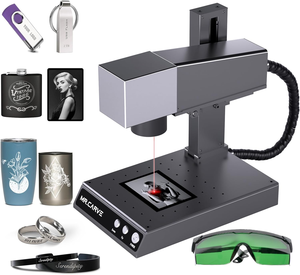
Engineered for high throughput, micro-precision direct part marking (DPM), 3D surface tracking, and zero-maintenance operation in rugged Chicago assembly environments.
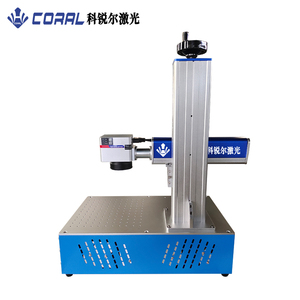
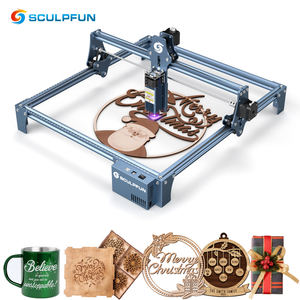
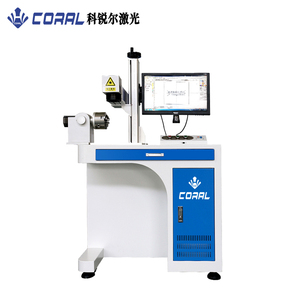
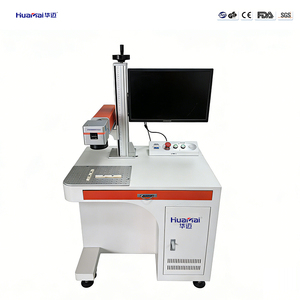
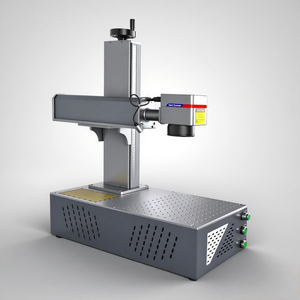
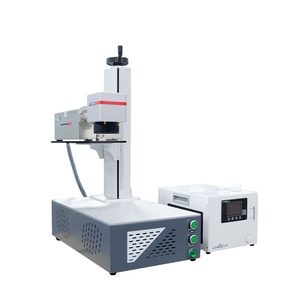
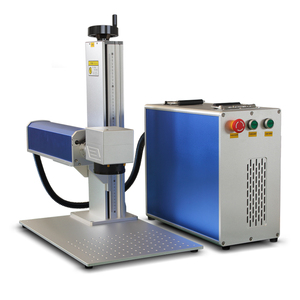
An engineering insight into wavelength optimization, MOPA technology, direct part traceability, and automation integration across the Greater Chicagoland Industrial Basin.
The Greater Chicago area—spanning key industrial hubs such as Elk Grove Village, Schaumburg, Elgin, Rockford, and the O'Hare Logistics Corridor—remains one of North America's most rigorous manufacturing ecosystems. From Tier-1 automotive stampers and precision aerospace engine component machining shops to ISO-13485 medical device manufacturers, the demand for permanent, high-contrast, zero-stress direct part marking (DPM) has transitioned from an operational bonus to a strict contractual prerequisite.
Selecting an industrial metal laser engraver supplier requires navigating complex physics parameters: pulse duration (ns), beam quality factor ($M^2$), peak energy density ($J/cm^2$), laser source architecture (Q-switched vs. MOPA vs. UV Cold Lasers), and integration requirements under OSHA and ANSI Z136.1 laser safety standards. This guide provides Chicago operations directors, manufacturing engineers, and procurement managers with deep technical information gain for selecting scalable laser engraving machinery.
Choosing the correct laser medium is critical to optimizing photon absorption and avoiding costly thermal degradation:
| Laser Wavelength | Source Type | Primary Metallic Substrates | Key Industrial Advantage |
|---|---|---|---|
| 1064 nm | Ytterbium Fiber (Q-Switched) | Carbon Steel, Aluminum 6061/7075, Brass, Copper | High speed, deep 3D mold engraving, ultra-long source lifetime (>100,000 hrs). |
| 1064 nm (Tunable) | MOPA Fiber (JPT M7 / Raycus MAX) | Stainless Steel, Anodized Titanium, Thin Foils, ABS | Vaporization-free black annealing, color marking, zero micro-cracking on thin parts. |
| 355 nm | Ultraviolet (UV) Cold Laser | Heat-Sensitive Alloys, Gold, Silver, Plated Metals, Polymers | Photochemical non-thermal processing, zero heat-affected zone (HAZ), sub-micron resolution. |
| 10.6 µm | CO2 RF Metal Tube | Coated Metals, Painted Anodized Aluminum, Wood/Plastics | Surface paint/coating removal without altering the structural metallic base. |
Manufacturers across Illinois face unique regulatory and operational demands depending on their vertical market sector. Our specialized equipment architectures directly solve these localized operational challenges:
High-contrast DataMatrix 2D codes and VIN engraving on cast iron, hardened steel gears, and aluminum housings capable of surviving salt spray, heat cycles, and mechanical wear.
ISO 13485 compliant black oxide marking on surgical instruments, orthopedic implants, and titanium screws that survive repeated autoclave sterilization without rust.
Deep 2.5D/3D dynamic optical galvo engraving into nickel alloys (Inconel), titanium, and structural aircraft brackets without stress concentration induction.
Built under strict ISO 9001:2015 quality control systems with robust components engineered for multi-shift industrial execution.
Every laser system undergo rigorous 72-hour burn-in stress testing, optical alignment calibration, and power stability verification prior to dispatch to Chicago customer sites.
Advanced 3-axis galvo scan heads compensate automatically for stepped, curved, cylindrical, or irregular multi-planar parts without manual Z-axis height adjustment.
Standard EtherNet/IP, Profinet, TCP/IP, and PLC I/O interface software capabilities allow seamless communication with automated production belts, COBOT arms, and MES/ERP systems.
How Midwest metal fabricators are optimizing throughput, eliminating consumables, and meeting stringent traceability standards.
Legacy marking techniques like continuous inkjet (CIJ) and mechanical dot-peen stamping introduce high recurring costs (inks, solvents, stylus replacement) and mechanical wear. Chicago machine shops are aggressively retrofitting automated fiber laser marking heads into existing automation lines—reducing operational consumable costs to near zero while raising marking clarity to 4000 DPI.
With supply chains shifting back to the US Midwest, local fabricators handle diverse job-shop batches. Machines configured with flexible CAD/CAM software (supporting DXF, AI, STEP, SVG) and rotary attachments empower job shops to switch instantly between marking small tool sets, large chassis plates, customized tumblers, and serialized machine tags with zero setup latency.
Midwest winters present harsh warehouse environmental swings. Industrial-grade air-cooled fiber laser systems feature sealed optical pathways (IP54/IP65 ratings) that prevent condensation, dust ingress, and thermal drift, guaranteeing identical focal accuracy from summer heatwaves to freezing winter floor temperatures.
Vaporizing heavy metals like nickel, lead, copper, and chrome generates sub-micron toxic particulate fumes. Modern local installations strictly integrate multi-stage HEPA and activated carbon filtration units to maintain safe workplace air quality mandated by OSHA and Illinois EPA regulations.
Addressing essential technical, operational, and service questions for regional Midwest buyers.
Q-Switched fiber lasers feature fixed pulse durations (typically 100ns–120ns), making them ideal for high-speed aggressive metal etching, deep 2.5D engraving, and standard barcode marking on steel and aluminum. MOPA (Master Oscillator Power Amplifier) fiber lasers offer independently adjustable pulse durations (from 2ns up to 500ns). This allows precise thermal management, enabling non-burning black annealing on stainless steel, damage-free marking on thin metal foils, and vivid color marking on titanium and stainless steel.
Yes. While raw 1064nm infrared light suffers from high reflectivity on polished copper and brass, our high-peak-power MOPA fiber lasers (specifically 60W, 100W, and higher) and 355nm UV Cold Lasers easily overcome the optical reflectivity threshold. UV lasers use shorter wavelengths with significantly higher photon energy absorption rates, making them exceptionally clean for fine jewelry micro-cutting and reflective brass marking.
Most of our compact desktop and standard enclosed fiber laser marking systems run on standard single-phase 110V/120V AC (60Hz) power, pulling under 10A—making them plug-and-play for standard shop outlets. High-power 100W+ deep engraving systems or integrated automation cells may utilize 220V single-phase or 3-phase power depending on auxiliary cooling and fume extraction setups.
Absolutely. We encourage Chicago and Midwest manufacturers to send sample parts directly to our application engineering laboratory. We perform detailed optical test matrices to establish exact speed, frequency, focal depth, and beam parameters required to achieve your desired mark, delivering a complete feasibility report and marked samples back to your engineering team.
Our laser engraving platforms support industry-standard control software including EZCAD3 (for 3D dynamic galvo control) and LightBurn Laser Software. The system imports all major vector and raster formats seamlessly, including DXF, AI, PLT, SVG, STEP, BMP, JPG, and dynamic 2D DataMatrix/QR code generators with serialization database links (SQL, Excel, CSV).
Our fully enclosed laser systems comply with Class 1 laser safety standards (ANSI Z136.1 and IEC 60825-1), equipped with safety interlocked doors, certified OD6+ protective viewing windows, and emergency stop circuits. For open-worktable Class 4 setups, we provide complete safety protocols, eye protection goggles, and safety enclosure integration guidance.
Talk directly with an experienced laser application engineer. Request a live virtual demo, submit your metal parts for free sample testing, or receive an immediate price quote.