
Featured Industrial Laser Processing Equipment
Explore high-performance enclosed, UV, MOPA fiber, and CO2 systems deployed across Hanoi's advanced electronics, automotive, and industrial manufacturing corridors.
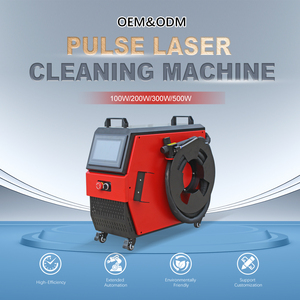
High Cost Performance 100w 200w 300w 500w Widely Laser Cleaning Machine Remove Paint air Cooling Pulsed Laser Cleaning Machine
Contact Us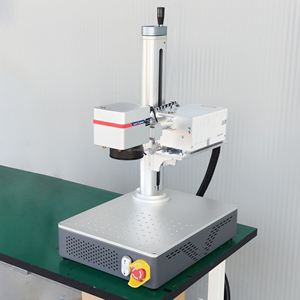
Portable Glass UV Laser Marker 5W Or Leaves Engraving Glass/stone/metal/wood
Contact Us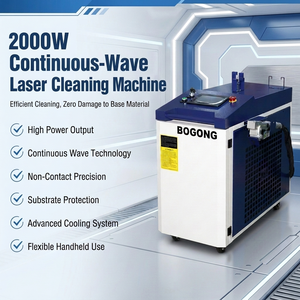
BOGONG 2000W CW Laser Cleaning Machine Handheld Industrial Rust Removal Floor Coating Surface Treatment for Construction Metal
Contact Us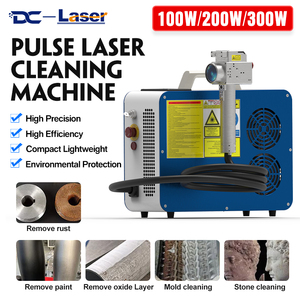
Portable Handle Pulse JPT Laser Rust Removal Cleaner 50w 100w 200w 300w Laser Cleaning Machine for Wood Metal
Contact Us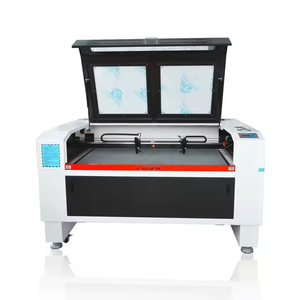
Fully automatic 6090/1390/1610 CO2 laser cutting machine for acrylic board
Contact Us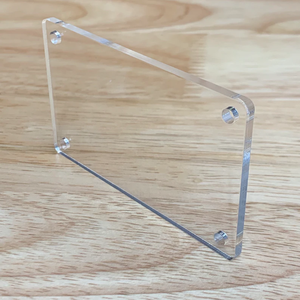
JAYI Factory Custom Laser Cut Acrylic Shapes Customized Display Acrylic Cutting Service With Printing And Engraving
Contact Us
Bluetimes Mobile 1500W 2000W 3000W Continuous Wave Fiber Laser Cleaning Machine Easy to Operate
Contact Us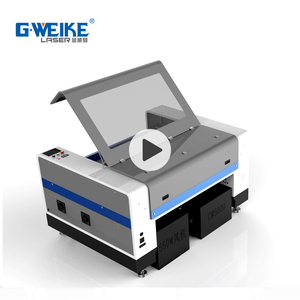
G.WEIKE 150 Watts 400 Watt Acrylic CO2 Laser Cutting Machine
Contact UsThe Shift Toward Enclosed Laser Systems in Hanoi’s Industrial Ecosystem
As Northern Vietnam solidifies its position as a global manufacturing powerhouse, the Greater Hanoi economic corridor—encompassing key industrial clusters in Bac Ninh, Thai Nguyen, Hai Phong, and Hung Yen—is undergoing a rapid technological transformation. High-tech global electronics OEMs, automotive component suppliers, and precision medical device fabricators have shifted away from open-frame laser equipment toward fully enclosed (Class 1 safety rated) laser markers.
This structural change is driven by stringent international safety standards (IEC 60825-1 / CDRH compliance), heightened corporate governance surrounding workplace safety, and the imperative for zero-defect component traceability. Open-frame laser operation introduces significant hazardous optical radiation risks and airborne particulate contamination. Enclosed laser marking workstations eliminate scatter radiation risk through certified OD6+ optical viewing windows, interlocked access doors, and integrated HEPA fume extraction interfaces.
Information Gain Insight: Modern automated production lines in Hanoi require sub-micron precision direct part marking (DPM) of DataMatrix codes on heat-sensitive substrate surfaces. Class 1 enclosed platforms protect sensitive optical galvos from ambient industrial dust, ensuring line stability and maintaining peak power density across multi-shift operation cycles.
Why Safety Enclosures Are Essential for Northern Vietnam's Tier-1 Supply Chains
Manufacturing facilities supplying multinationals operating within Bac Thang Long Industrial Park or Hoa Lac Hi-Tech Park face rigorous compliance audits. Deploying an enclosed laser marker guarantees that the workstation functions as a Class 1 device under normal operation, bypassing the need for cumbersome personal protective equipment (PPE) restrictions for entire shop-floor zones. Furthermore, enclosure design allows for localized fume containment—critical when processing engineering plastics like ABS, PBT, or anodized aluminum which release toxic fumes during laser ablation.
Evaluation Matrix: Enclosed Laser Marking Wavelength Technologies
Selecting the optimal enclosed laser system requires evaluating the material interaction dynamics dictated by wavelength, pulse duration, and peak beam quality. Suppliers servicing the Hanoi market generally offer three dominant laser engine architectures:
| Technology Type | Wavelength | Primary Substrate Compatibility | Thermal Impact Zone | Typical Hanoi Industrial Application |
|---|---|---|---|---|
| MOPA Fiber | 1064 nm | Stainless steel, Aluminum, Brass, Titanium, Hard Plastics | Adjustable (Nanosecond control) | Automotive VIN plates, black anneal marking on stainless surgical tools, anodized smartphone casings. |
| Cold UV Laser | 355 nm | Glass, Heat-sensitive Plastics (PE, PP), Silicon, PCB Substrates | Extremely Low (Photochemical interaction) | Micro-marking Apple AirTags/ABS housings, glass vial etching, SMT circuit board matrix coding. |
| CO2 Galvo / Plotter | 10.6 µm / 9.3 µm | Wood, Acrylic, Organic Polymers, Glass, Packaging Films | Moderate to High (Photothermal interaction) | High-speed FMCG packaging date coding, acrylic display panel cutting, leather/textile processing. |
Top Capabilities to Demand from Hanoi Enclosed Laser Marker Suppliers
When evaluating local laser marking machinery suppliers and distributors in Hanoi, buyers must look beyond basic pricing and focus on total cost of ownership (TCO), dynamic optical capabilities, and field support responsiveness. Below are six essential benchmarks based on UK-engineered manufacturing standards:
3D Dynamic Auto-Focusing
Standard 2D galvo heads fail on curved, stepped, or sloped parts. Advanced enclosed platforms integrate 3-axis dynamic focal expansion, maintaining beam spot focus across complex geometric contours without manual mechanical adjustment.
Full CE & ISO 9001 Compliance
Insist on verifiable safety documentation. Dual-channel safety interlocks, emergency stop circuits, and OD6+ rated safety viewing glass ensure complete compliance with global environmental health and safety (EHS) directives.
MOPA Fiber Pulse Width Control
Fixed Q-switched lasers offer limited pulse control. MOPA (Master Oscillator Power Amplifier) lasers allow independent frequency and pulse duration tuning (2ns to 500ns), enabling high-contrast black annealing on steel without destroying corrosion resistance.
Cold UV Photochemical Marking
For sensitive electronics and medical polymers, 355nm UV lasers break molecular bonds directly without micro-cracking or thermal charring, yielding pristine contrast marks on white ABS, Teflon, and ultra-thin glass components.
Industrial Automation Interfacing
Modern enclosed units must feature robust I/O ports, Ethernet/IP, TCP/IP, and PLC integration capabilities for seamless pairing with cobot arm loaders, motorized XY tables, and automated inline conveyor systems.
Localized Hanoi Service Network
Equipment downtime stalls production lines. Top suppliers maintain local field application engineers in Northern Vietnam, offering rapidly accessible spare parts, preventative maintenance SLAs, and custom sample testing facilities.
Localized Industrial Trends Shaping Laser Procurement in Hanoi
1. Micro-DPM Traceability in Electronic Supply Chains
With major global technology hubs established across Hanoi, Bac Ninh, and Thai Nguyen, component mini-satellites require high-density DataMatrix codes printed on miniature connectors, metal shields, and flex PCBs. Enclosed UV and MOPA fiber laser markers deliver sub-micron spot sizes ($M^2 < 1.2$), enabling crisp 1mm x 1mm codes readable by automated vision systems under high-speed manufacturing cycle times.
2. Transition from Chemical Etching to Eco-Friendly Laser Ablation
Environmental regulations enforced by Vietnamese municipal authorities have accelerated the phase-out of traditional acid-etching and ink-jet printing methods due to chemical waste hazards. Continuous wave (CW) and high-power pulsed fiber lasers (ranging from 100W to 3000W) provide non-contact, dry cleaning and surface modification solutions. Enclosed laser cleaning and surface preparation chambers capture removed oxides and paints safely into particulate filters without hazardous chemical runoff.
3. High-Speed Galvo Processing vs. Flatbed Plotters
While traditional flatbed CO2 laser cutters (such as 6090/1390 acrylic cutting formats) excel at large-format sheet cutting, high-speed 3-axis Galvo systems like the Meta-D platform are rapidly gaining traction in Hanoi factories. Galvo optical scanning yields marking and cutting speeds up to 10 times faster than mechanical gantry plotters, drastically boosting throughput for high-volume automotive label and gasket manufacturing.
Enterprise Advantage: Engineering Superiority & Global Support Framework
For over three decades, Lotus Laser Systems (Laserite Ltd.) has set the standard in designing and manufacturing industrial UV, MOPA fiber, and CO2 laser engraving, marking, and cutting machines. Unlike standard white-label resellers, Lotus systems are engineered with military-spec aluminum frames, proprietary optical beam delivery pathways, and ISO 9001 accredited quality management system controls.
The Lotus Difference: Every Lotus enclosed laser machine features true 3D beam delivery as standard, allowing automatic focal depth adjustment across stepped, cylindrical, and complex contoured workpieces without physical z-axis mechanical delay.
Supported across 46 countries through trained industrial distributors and backstopped by senior application specialists at UK headquarters, Lotus equipment guarantees maximum uptime, structural rigidity, and consistent optical performance across a 15+ year operational lifespan.
Frequently Asked Questions: Purchasing Enclosed Laser Markers in Hanoi
Why choose an enclosed laser marker over an open-frame system for Hanoi factories?
How do high humidity and ambient temperatures in Northern Vietnam affect laser marker performance?
What is the practical difference between standard Fiber and MOPA Fiber lasers for metal marking?
Can enclosed laser marking systems be integrated into automated conveyor lines?
What maintenance is required for enclosed fiber and UV laser markers?
Can buyers test sample materials prior to making a purchasing commitment?
Accelerate Your Hanoi Manufacturing Quality & Traceability
Schedule a live optical marking demonstration, request a free sample test report on your components, or speak directly with our engineering application specialists today.
Contact Us